How Does RFID Theft Work?
RFID theft occurs when unauthorized removal of RFID-tagged items happens without proper verification. RFID security systems prevent theft by detecting active tags at exit points and triggering alarms when items leave without authorization.
In real deployments, RFID theft prevention is not about blocking radio signals or making RFID tags impossible to remove. It is about creating a reliable connection between tag identification, reader detection, access control rules, and alarm response.
I have worked with RFID identification systems in environments such as libraries, warehouses, and controlled-access facilities, where the challenge is rarely “can the reader detect a tag?” The harder question is whether the system can distinguish normal movement from unauthorized removal.
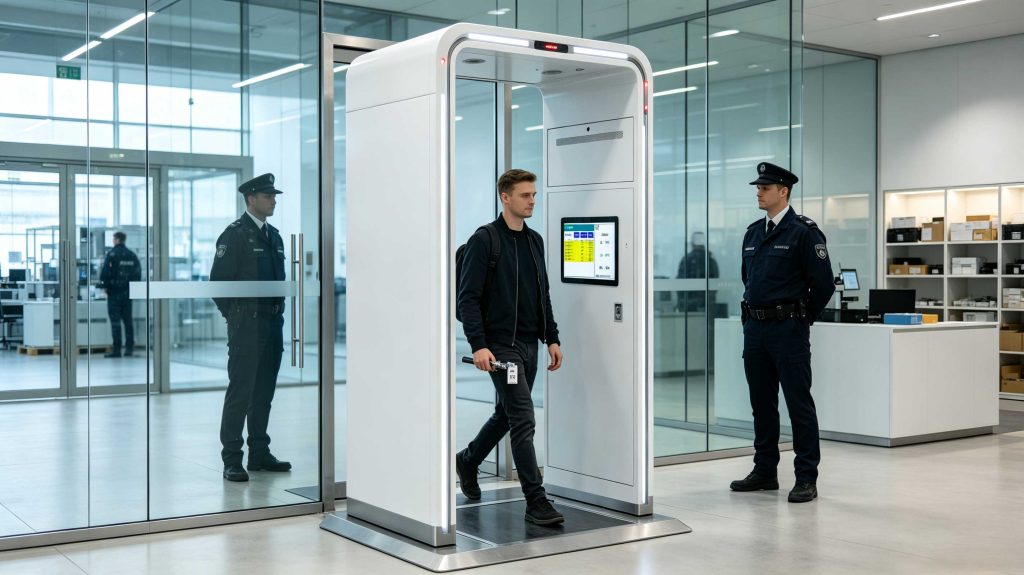
A well-designed RFID security gate continuously monitors tagged objects passing through a defined detection area. When a person exits with an item that has not been properly checked out or authorized, the RFID system recognizes the event and activates an alarm.
According to GS1, RFID technology enables automatic identification of physical objects by using radio communication between tags and readers. RFID security applications extend this identification capability into loss prevention and inventory control processes.
how rfid security gates prevent theft
An RFID anti-theft system normally consists of four key elements:
| Component | Function |
|---|---|
| RFID Tag | Attached to products, books, equipment, or assets |
| RFID Security Gate | Detects RFID tags entering or leaving the monitored area |
| Management Software | Determines authorization status |
| Alarm System | Provides visual and audio warning |
The RFID tag itself does not “know” whether something is stolen.
It simply stores identification information.
The security system makes the decision by comparing the tag event with business rules.
For example:
A library visitor checks out a book.
The system changes the book status from available to borrowed.
When the person passes through the RFID gate, no alarm occurs.
Another visitor attempts to leave with the same book without checkout.
The gate detects the RFID tag.
The system identifies an unauthorized event.
The alarm activates.
The difference is not the tag.
It is the software logic behind the tag.
How RFID Theft Detection Works Step by Step
1. RFID Tag Identification
Each protected item receives an RFID tag.
Examples include:
- Books
- Retail products
- Tools
- Medical equipment
- Documents
- Industrial assets
The tag usually contains an EPC identifier or unique product reference.
For UHF RFID systems, EPC Gen2 / ISO 18000-6C defines communication between RFID readers and passive tags.
2. RFID Gate Creates Detection Zone
The security gate contains specially designed RFID antennas.
The antenna coverage area is carefully adjusted to avoid:
- Blind zones
- Excessive reading outside the doorway
- Missed tag detection
This is one of the most important engineering aspects.
A strong reader with poor antenna design can still create unreliable protection.
In practical installation projects, antenna positioning is often adjusted several times because the physical environment changes RF performance.
Metal doors, shelving, people, and nearby electronic equipment can influence the reading field.
3. Infrared Trigger Activates Reading
Modern RFID security gates often combine RFID detection with infrared sensing.
The infrared sensor determines when a person enters the detection area.
Then the RFID reader begins the scanning process.
This approach provides several advantages:
- Reduces unnecessary continuous scanning
- Improves detection accuracy
- Helps count people entering and leaving
- Reduces interference from surrounding tags
For high-traffic locations, this trigger-based design is especially valuable.
4. System Determines Authorization
After detecting RFID tags, the system checks whether the item movement is allowed.
Possible results:
| RFID Event | System Response |
|---|---|
| Authorized checkout | No alarm |
| Returned item | Updated inventory status |
| Unauthorized removal | Sound and light alarm |
| Unknown tag | Security notification |
This makes RFID theft prevention different from traditional electronic article surveillance systems.
The system knows what item moved, not only that something crossed the doorway.

rfid theft prevention in libraries and retail
RFID anti-theft systems are widely used where organizations need both:
- Inventory visibility
- Loss prevention
Traditional theft prevention systems often answer one question:
“Did something leave the area?”
RFID provides a deeper answer:
“What exactly left, and was that movement authorized?”
This difference creates operational advantages.
Library Applications
Libraries are one of the most mature RFID security environments.
An RFID library system can support:
- Self-checkout
- Automatic returns
- Inventory counting
- Theft prevention
- Visitor statistics
A security gate can identify multiple books passing through the detection area simultaneously.
Retail Applications
Retail RFID security systems can protect:
- Apparel
- Luxury products
- Electronics
- High-value merchandise
The same RFID infrastructure can support inventory management and loss prevention.
Retailers do not only want alarms.
They want accurate inventory information.
Multi-Tag Reading and Low False Alarm Performance
A major advantage of RFID security gates is multi-tag reading capability.
A person may carry:
- Several books
- Multiple products
- Multiple tagged assets
The RFID reader must identify all relevant tags quickly.
A high-performance RFID gate uses:
- Anti-collision algorithms
- Optimized antenna design
- Adjustable RF parameters
- Signal processing technology
Cykeo RFID security gate systems are designed according to ISO18000-6C (EPC C1G2) requirements and support multi-tag reading with low missed-reading and false-reading rates.
The system integrates:
- RFID detection
- Infrared triggering
- Audio alarm
- Visual alarm
- People counting
- Display expansion
This creates a complete security and management platform rather than a simple alarm device.
Online and Offline RFID EAS Alarm Modes
Modern RFID theft prevention systems often support two operating modes.
Online EAS Mode
Connected with management software.
Advantages:
- Real-time authorization checking
- Event records
- Remote management
- Inventory integration
Offline EAS Mode
Works independently.
Advantages:
- Continues protection during network interruptions
- Suitable for standalone locations
- Simple deployment
This flexibility is important for:
- Libraries
- Archives
- Retail stores
- Small facilities
A security gate should continue protecting assets even when communication conditions change.
RFID Security Gate Hardware Features
A professional RFID security gate typically includes:
High-Sensitivity RFID Detection
Designed to detect multiple RFID tags while maintaining stable performance.
Accurate Antenna Coverage
The antenna structure determines:
- Detection area
- Reading consistency
- Blind spot reduction
Integrated Sound and Light Alarm
When unauthorized movement occurs:
- Alarm lamp activates
- Buzzer sounds
- Security staff receive immediate notification
Communication Options
Depending on deployment requirements, systems may support:
- Ethernet
- WiFi expansion
- 4G communication
This allows flexible installation in different environments.
Author Experience Insight
During RFID security gate deployments, the most overlooked issue is often not the reader specification.
It is the doorway environment.
A narrow entrance with metal structures behaves differently from an open library lobby.
A retail exit surrounded by electronic equipment behaves differently from a controlled archive room.
Successful RFID theft prevention requires:
- Correct antenna placement
- Proper reading zone adjustment
- Real-world tag testing
- Integration with business workflows
The technology works best when the physical installation is treated as part of the RFID system design.
RFID Security Gate Technical Advantages
High-Performance Multi-Tag Reading for Theft Prevention
A professional RFID theft prevention system must do more than detect one RFID tag.
In real environments, several items often pass through the gate together:
- A customer carrying multiple books
- A worker moving several tools
- A warehouse operator transporting multiple tagged assets
- A retail customer carrying multiple products
The RFID security gate needs to identify all tags accurately while avoiding false alarms.
Cykeo RFID security gate solutions are designed around ISO 18000-6C (EPC C1G2) communication standards and support multi-tag identification, allowing multiple RFID tags to be detected simultaneously during movement.
The engineering challenge is not simply increasing reading distance.
A security gate that reads too widely may detect nearby inventory incorrectly.
A gate with insufficient coverage may miss items passing through.
The target is controlled detection.
Precision Antenna Design Eliminates Detection Blind Spots
The antenna system determines the actual performance of an RFID security gate.
During installation projects, antenna adjustment is usually one of the most important steps.
The reading field must cover:
- Entrance width
- Exit direction
- Human movement area
- Item carrying position
At the same time, it should avoid unnecessary detection outside the security zone.
Cykeo RFID gates use specially designed antenna structures to create controlled reading areas and reduce blind spots.
This matters in places such as:
- Libraries with narrow exits
- Retail stores with busy entrances
- Archives with controlled access
- Industrial facilities with equipment movement
The physical environment always matters.
Concrete walls, metal shelves, electronic devices, and human traffic can influence RF performance.
A successful RFID security deployment starts with understanding the location, not only the product specifications.
Infrared Trigger Technology for Accurate Detection
Why RFID Gates Use Infrared Sensors
Continuous RFID scanning is not always the best approach.
An intelligent RFID security gate combines RFID detection with infrared triggering.
The infrared sensor identifies when a person enters the detection zone.
Then the RFID reader performs the identification process.
Benefits include:
| Function | Advantage |
|---|---|
| Direction Detection | Identifies entering and leaving movement |
| Triggered Reading | Reduces unnecessary RF scanning |
| People Counting | Records visitor flow |
| Improved Accuracy | Helps separate valid movement from background tags |
Cykeo RFID gate systems integrate infrared trigger technology to support directional detection and people counting functions.
This design is especially useful in locations where hundreds of people may pass through daily.
Integrated Audio and Visual Alarm System
A theft prevention system must provide immediate feedback.
When unauthorized movement is detected:
- LED warning indicators activate
- Audible alarms notify staff
- Event information can be transmitted to management software
Cykeo RFID security gates integrate sound and light alarm functions for rapid response.
This reduces dependence on manual monitoring.
Security staff do not need to continuously watch every entrance.
The system creates an automatic response when an abnormal event occurs.
Online and Offline EAS Alarm Modes
Modern RFID theft prevention systems need flexibility.
Online EAS Mode
The RFID gate communicates with management software.
Advantages:
- Real-time authorization verification
- Event recording
- Remote monitoring
- Integration with library or inventory systems
Offline EAS Mode
The gate operates independently.
Advantages:
- Protection continues during network interruption
- Suitable for standalone locations
- Simple deployment
This dual-mode design is valuable for:
- Public libraries
- Corporate archives
- Retail stores
- Industrial tool rooms
A security system should not stop protecting assets because of temporary network problems.
Cykeo RFID Security Gate Product Architecture
Cykeo intelligent RFID security gates combine several technologies into one integrated platform.
Core Hardware Structure
| Module | Function |
|---|---|
| UHF RFID Reader | Reads ISO 18000-6C/EPC C1G2 tags |
| RFID Antenna Array | Creates accurate detection coverage |
| Infrared Sensor | Detects movement direction |
| Alarm Module | Provides sound and light alerts |
| Communication Interface | Connects with software platforms |
| Display Interface | Shows item and traffic information |
Cykeo gate products support Ethernet communication and optional wireless expansion such as WiFi and 4G connectivity depending on deployment requirements.
Real-Time Display and People Counting
Many organizations require more than theft detection.
They also need operational data.
An RFID security gate can provide:
- Number of items passing
- Number of people entering
- Number of people leaving
- Alarm history
- RFID identification records
An external display can show:
- Detected item information
- Quantity statistics
- Alarm messages
- Visitor flow information
This turns an anti-theft gate into a management tool.
RFID Security Gate Applications
Library RFID Theft Prevention
Libraries are one of the most common RFID security applications.
An RFID library gate supports:
- Book protection
- Self-service borrowing
- Automatic returns
- Inventory visibility
- Visitor statistics
A traditional barcode system requires manual scanning.
RFID allows multiple books to be detected while a person walks naturally through the exit.
Retail Loss Prevention
Retail businesses use RFID security systems to reduce inventory shrinkage.
Typical applications:
- Apparel stores
- Luxury retail
- Electronics stores
- Warehouse outlets
The advantage is that the same RFID infrastructure supports:
- Inventory counting
- Stock visibility
- Theft prevention
The security system and inventory system become connected.
Enterprise and Archive Security
Organizations managing sensitive documents often require controlled movement.
Applications include:
- Government archives
- Corporate document centers
- Research institutions
- Legal records management
RFID provides an automatic record of asset movement.
Industrial Tool Management
Factories and maintenance organizations often struggle with missing tools.
RFID security gates can monitor:
- RFID Tool cabinets
- Maintenance areas
- Production zones
When tagged tools leave without authorization, the system immediately generates an alert.
Why Choose Cykeo RFID Security Gate Solutions?
Cykeo focuses on RFID systems where accuracy, reliability, and integration are critical.
Key advantages include:
1. Industrial RFID Experience
Cykeo develops RFID readers, modules, gates, and smart identification systems for industrial environments.
2. Protocol Compatibility
Supports:
- ISO 18000-6C
- EPC C1G2
- UHF RFID applications
3. Flexible Communication
Support options include:
- Ethernet
- WiFi expansion
- 4G expansion
4. Integrated Security Design
Combines:
- RFID identification
- Infrared triggering
- Alarm functions
- People counting
5. Software Integration Capability
Systems can connect with management platforms through APIs and development interfaces.
FAQ: How Does RFID Theft Work?
1. Can RFID security gates detect multiple stolen items at once?
Yes. RFID security gates are designed to identify multiple RFID-tagged items simultaneously using anti-collision technology. This allows several books, products, or assets to be detected during one passage.
2. Does RFID theft prevention require employees to scan every item?
No. RFID systems automatically identify tagged objects through radio communication. Users do not need direct line-of-sight scanning like barcode systems.
3. Can RFID security gates count people?
Yes. RFID security gates equipped with infrared sensors can detect movement direction and count people entering or leaving an area.
4. What happens when someone removes an RFID-tagged item without permission?
The system detects the RFID tag, checks authorization status, and activates sound and visual alarms if the movement is unauthorized.
5. Can RFID theft prevention work without internet?
Yes. Many RFID security gates support offline alarm operation, allowing local protection even when network communication is unavailable.
6. Why does RFID security sometimes miss tags?
Possible causes include:
- Incorrect antenna installation
- Poor tag placement
- Metal interference
- Incorrect power settings
- Unsuitable RFID tags
Professional testing and installation are essential.
7. Can RFID security gates connect with existing management systems?
Yes. Ethernet communication, APIs, and software interfaces allow RFID gates to integrate with library systems, ERP platforms, warehouse systems, and security software.


评论
发表评论