Fixed RFID Reader for Warehouse and Industrial Automation
A fixed RFID reader is designed to stay in one location and continuously identify RFID-tagged items as they move through a defined reading zone. It is especially useful for warehouse gates, conveyor lines, production stations, asset tracking, and other applications where manual scanning becomes too slow or inconvenient.
If you are still getting familiar with RFID technology, it may help to start with the basic communication process before looking at fixed readers. Our guide explains how an RFID reader works, including the role of the reader, antenna, RFID tag and software system.
Fixed RFID Reader: Where Automatic RFID Reading Starts to Make Sense
There is a point in many RFID projects where handheld scanning simply stops being practical.
Imagine a warehouse receiving 300 pallets a day.
A worker could walk around with a handheld reader and check them one by one. It works, but after a while the process becomes repetitive, and missed scans are almost inevitable.
Now put a fixed RFID reader at the loading gate.
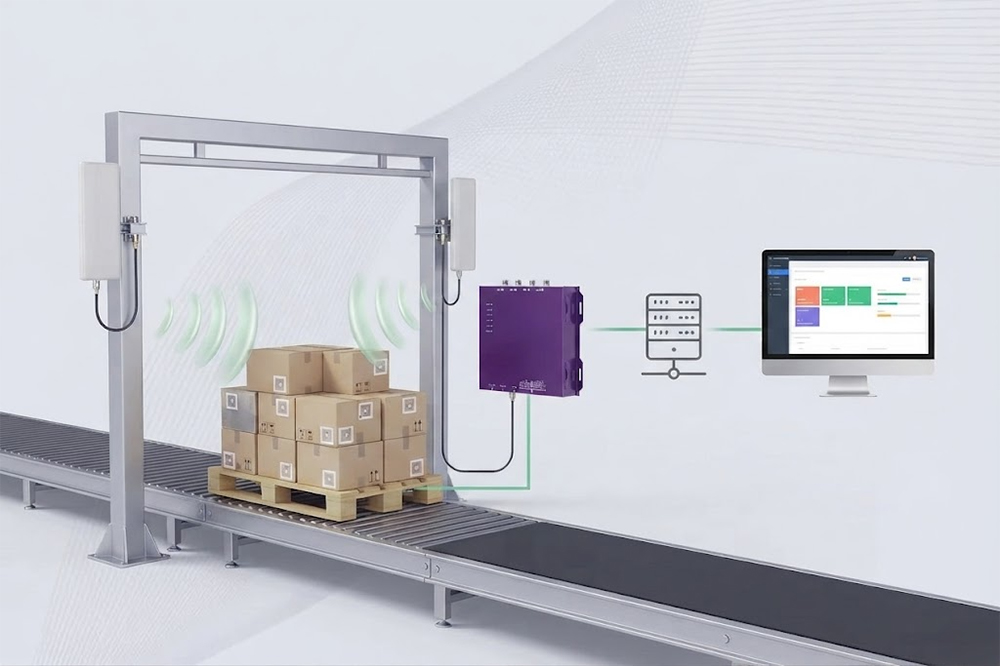
The pallets move through. The antennas stay in place. The system reads the tags automatically and sends the information to the warehouse software.
That is really where a fixed RFID reader earns its place.
A fixed reader is a stationary RFID device designed for continuous operation. It is normally installed at gates, conveyors, warehouse checkpoints, production lines, cabinets, vehicles, or other locations where tagged objects regularly pass through. Cykeo’s fixed RFID range includes 4-port, 8-port and 16-port readers, as well as forklift-oriented RFID readers.
The interesting part is that the reader itself is only one piece of the setup. Antennas, tags, mounting position, software and the physical environment can all change the result.
What Does a Fixed RFID Reader Actually Do?
The basic process is fairly straightforward.
The fixed reader sends RF signals through connected antennas.
When an RFID tag enters the reading zone, it responds to the signal. The reader receives the tag information, processes it, and sends the data to the customer’s software system.
There is no employee standing there pressing a trigger.
That is the main difference from a handheld RFID reader.
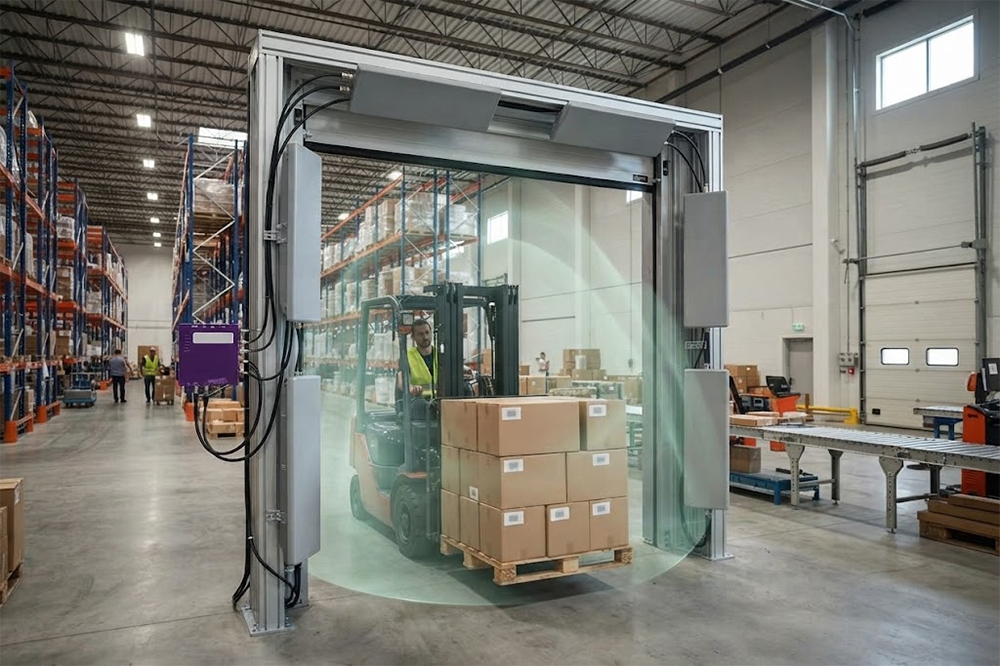
For a warehouse, this can mean that a forklift does not have to stop every time a pallet enters or leaves an area. If the reading zone has been designed properly, the identification happens in the background.
Cykeo describes its fixed readers as solutions for continuous reading in warehouses, logistics checkpoints, access control, asset tracking and automated identification systems. The company also provides SDK, API and demo software support for integration.
Why Warehouses Often Use Fixed RFID Readers
Warehouse operations are a good example because goods are constantly moving.
Inbound.
Storage.
Picking.
Sorting.
Outbound.
At several of these points, there is a natural “choke point” where products have to pass.
That is exactly where a fixed RFID reader can be useful.
For example, a warehouse might install antennas around a loading door. When a tagged pallet passes through, the system can record its movement and associate the tag ID with the relevant shipment or inventory record.
The reader does not need to know what the pallet means by itself.
The software handles that part.
The reader simply provides reliable tag data.
This separation is important for system integrators because it means the same hardware can potentially support different software workflows.
Fixed RFID Reader Applications
Warehouse tracking is only one use.
Warehouse and Logistics
Fixed readers can be installed at inbound and outbound checkpoints to identify pallets, cartons, containers, or other tagged goods.
Conveyor Tracking
A reader can be positioned beside a conveyor where tagged products pass through a defined reading zone.
Production Lines
Manufacturers can use fixed RFID readers to track work-in-progress, components, carriers, or production tools as they move between stations.
Access Control
RFID readers can identify tagged cards, badges, or vehicles approaching a controlled entrance.
Asset Tracking
Factories, hospitals, construction sites and other organizations can use fixed readers to monitor tagged equipment and assets.
Forklift Identification
A reader mounted on a forklift can communicate with pallet tags, location tags, or floor markers while the vehicle is moving.
Smart Cabinets
A fixed reader can also become part of a smart cabinet or locker, where antennas are positioned inside the equipment to identify stored items.
These applications look different on the surface, but the basic idea remains the same: the reader stays in position while the tagged object moves through or around it. Cykeo lists these applications across warehousing, logistics, manufacturing, access control, asset management and industrial automation.
How Many Antenna Ports Do You Need?
This is one of the questions worth asking before buying a fixed RFID reader.
A small reading zone may only need one antenna.
A warehouse gate may need several.
Cykeo offers fixed readers with 4-port, 8-port and 16-port configurations, allowing multiple antennas to be connected to one reader.
Why would you need more than one?
Because RFID coverage is not always a simple circle around the reader.
Suppose a truck passes through a 5-meter-wide gate.
One antenna pointing from one side might leave weak spots. Two or more antennas can be positioned to create better coverage.
The exact setup depends on the tag position, gate dimensions, antenna characteristics and surrounding materials.
More ports do not automatically mean better performance. They simply give the system designer more options.
Read Range: Don’t Believe the Number Alone
“20-meter RFID reader” sounds impressive.
But what happens when you install it inside a warehouse full of metal racks?
That is where the real project begins.
The practical reading distance depends on several factors:
- RFID tag design
- Antenna type
- Antenna gain
- Reader output power
- Tag orientation
- Installation height
- Nearby metal
- Liquids
- Reading direction
- RF interference
Cykeo’s product information also points out that antenna type, port configuration, output power, installation height and surrounding structures affect real-world fixed-reader performance.
So if a customer asks for a fixed RFID reader with “maximum range,” I would ask a few more questions before recommending a model.
What is the tag?
Where is it mounted?
How fast is the object moving?
How wide is the reading zone?
What is around the antenna?
Those answers are usually more useful than the range number alone.
What About Reading Hundreds of Tags?
UHF RFID becomes particularly interesting when multiple tagged objects need to be identified.
A barcode system generally expects a scanning action.
RFID does not work that way.
A fixed UHF RFID reader can communicate with multiple tags in the same reading area using anti-collision methods, allowing many tag IDs to be collected during a short period.
This is one reason fixed readers are attractive for logistics and warehouse automation.
A pallet can contain multiple tagged cartons. Several pallets may be close together. The software then needs to decide which tags belong to which movement event.
That last part is not purely a reader problem.
Reader configuration and antenna placement matter, but so does the software logic.
This is where system integration experience becomes important.
Fixed RFID Reader vs Handheld RFID Reader
The difference is easier to understand through a real situation.
A warehouse employee wants to find a missing tool somewhere in a storage area.
A handheld RFID reader is probably more convenient. The employee walks around, checks shelves and searches for the tag.
Now imagine 500 pallets moving through a shipping gate every day.
A fixed reader makes much more sense because the process can run automatically.
So the distinction is fairly simple:
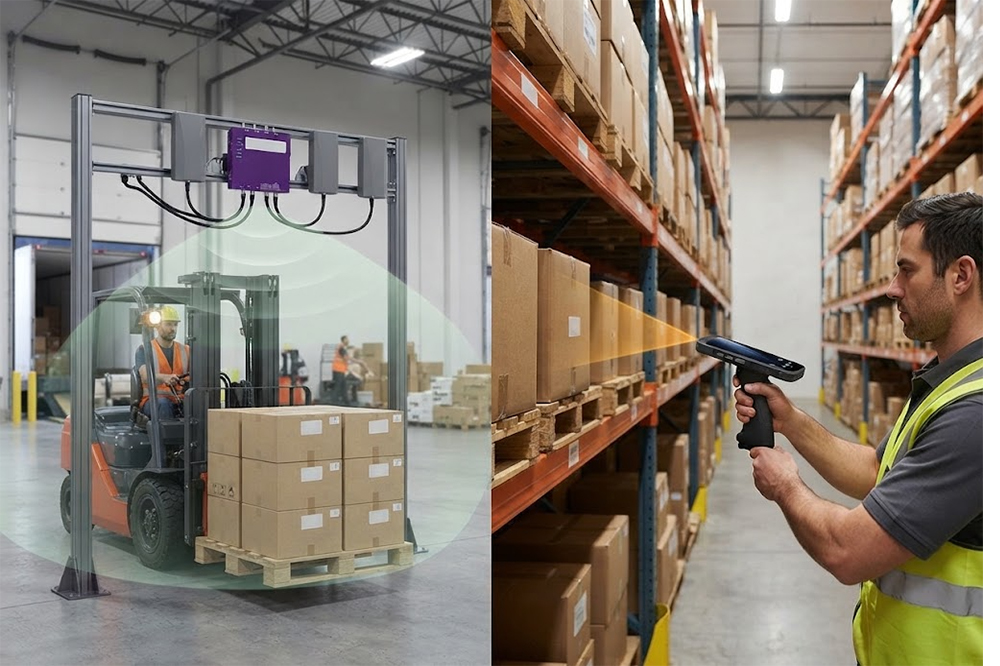
Fixed RFID reader = automation and continuous monitoring
Handheld RFID reader = mobility and operator control
Neither one is universally better.
In fact, a well-designed warehouse may use both.
Fixed readers handle automatic movement events, while handheld readers deal with inventory checks, exceptions and missing-item searches.
When a Fixed RFID Reader May Not Be the Right Choice
This is worth mentioning because fixed readers are sometimes overused.
If the customer only needs to register tags at a desk, a USB RFID reader may be enough.
If employees only need occasional inventory checks, a handheld reader could be more practical.
If the reading distance is only a few centimeters, a different RFID technology or reader type may be more appropriate.
A fixed reader also needs installation space.
Antennas need somewhere to go. Cables need routing. The reading zone needs to be controlled.
For a small project, the infrastructure may cost more than the RFID reader itself.
That does not make the fixed reader expensive. It simply means the complete system should be considered.
Software Integration Is Part of the Purchase
A fixed RFID reader normally becomes part of a larger software system.
The customer may already have:
- WMS
- ERP
- MES
- Access control software
- Inventory software
- Manufacturing software
- Custom IoT platform
So before placing a bulk order, check how the reader communicates.
Ethernet is common in industrial installations, while other interfaces may also be available depending on the model.
Cykeo provides SDKs, APIs and demo software to support integration with existing platforms. Its fixed RFID readers are positioned for software developers, system integrators, solution providers and enterprise customers.
For an OEM project, this becomes even more important.
A customer may not want a standalone reader at all. They may want RFID hardware integrated into a machine, cabinet, gate, forklift or automated system.
That changes the discussion from “Which reader has the best specification?” to “Which reader fits our architecture?”
What Should a Wholesale Buyer Ask the Manufacturer?
If you are a distributor or system integrator, sending a complete project description can make the quotation process much faster.
Include:
Application: Warehouse, logistics, manufacturing, access control, etc.
Reading zone: Approximate length and width.
Tag: Tag type and mounting position.
Tag quantity: Expected number of tags in the zone.
Movement: Stationary, conveyor, forklift, vehicle, or manual.
Antennas: Number and preferred installation positions.
Environment: Indoor, outdoor, metal structures, cold storage, etc.
Interface: Ethernet, serial, USB, GPIO or other requirements.
Software: WMS, ERP, MES, custom software.
Quantity: Sample, pilot project, or wholesale order.
Customization: OEM label, firmware, enclosure, connector or other requirements.
This gives the manufacturer something concrete to work with.
Cykeo’s fixed-reader portfolio includes industrial multi-port models and forklift readers, with technical guidance available for reader selection and antenna matching.
For distributors, that broader product range can also be useful. One customer may need a 4-port reader, another may need 8 or 16 ports, while a logistics customer may be more interested in a forklift-mounted unit.
A Practical Example
Let’s say a system integrator is building an RFID solution for a 3PL warehouse.
There are four loading doors.
Each door is around 4–5 meters wide.
Pallets are moved by forklift.
The customer wants automatic inbound and outbound identification and already has a WMS.
A reasonable starting point would be a fixed UHF RFID reader with multiple antenna ports.
But I would not order hundreds of units immediately.
First, install one door.
Test the actual tags.
Move pallets through at different speeds.
Check whether tags on the inside and outside of the pallet are being detected.
Then adjust the antenna positions.
If that pilot works, scaling to the other doors becomes much less risky.
That is usually a better approach than choosing a reader from a catalog and discovering installation problems after the bulk shipment arrives.
Choosing a Fixed RFID Reader for a Project
A good fixed RFID reader is not necessarily the one with the longest advertised range or the highest theoretical tag rate.
It is the one that fits the reading zone, antenna layout, tag characteristics, software architecture and working environment.
For a simple project, that might mean a small 4-port reader.
For a larger warehouse, an 8-port or 16-port configuration may give the integrator more flexibility.
For moving equipment, a rugged forklift RFID reader may make more sense.
Cykeo’s fixed RFID portfolio covers these different industrial scenarios and supports system integration through SDKs and APIs.
If you are sourcing fixed RFID readers for a warehouse project, system integration business, OEM product or wholesale distribution, the most useful next step is usually to provide the application details and ask the manufacturer to recommend the reader and antenna configuration.
Frequently Asked Questions
What is a fixed RFID reader?
A fixed RFID reader is a stationary device designed to continuously read RFID tags within a defined area. It is commonly installed at warehouse gates, conveyors, production lines, access points, and other automated tracking locations.
How far can a fixed RFID reader read?
The practical range depends on the reader, antenna, RFID tag, output power, tag orientation, installation and environment. UHF fixed readers can offer several-meter or longer ranges, but real performance must be tested in the actual installation.
How many antennas can a fixed RFID reader support?
It depends on the reader model. Cykeo offers 4-port, 8-port and 16-port fixed RFID readers, allowing multiple antennas to be used for larger or more complex reading zones.
Can fixed RFID readers read multiple tags at once?
Yes. UHF RFID readers use anti-collision techniques to communicate with multiple tags in the same reading area. Actual performance depends on tag density, reader settings, antenna layout and the environment.
Should I test a fixed RFID reader before bulk purchasing?
For industrial projects, testing is strongly recommended. Metal structures, liquids, tag placement, moving pallets and RF interference can produce results that are difficult to predict from product specifications alone.


评论
发表评论