RFID Writer and Reader: Desktop UHF Encoding Platform for Industrial Tag Management | Cykeo
RFID writer and reader is a desktop UHF encoding platform designed for fast tag registration, writing, and inventory management in operational environments. It enables stable multi-tag processing, high-success-rate writing, and structured asset workflows such as borrowing, returning, and tag registration without line-of-sight constraints.
In practical deployments across library and tool-room systems, its performance is defined not by single-tag speed, but by consistency under repeated batch encoding cycles.
Desktop RFID Writer and Reader System Overview
This RFID writer and reader desktop platform is built for tag administrators handling daily operational workflows. It supports:Based on EPC Gen2 / ISO/IEC 18000-6C architecture (GS1 EPCglobal standard), the system is widely used in structured asset environments where traceability matters.
Field Experience Insight: Why Desktop RFID Matters
In real operational rooms—especially libraries and maintenance centers—the workflow is not “single scan speed” but batch stability.Operators typically process:
This is where a desktop RFID writer and reader system becomes essential: it reduces manual barcode dependency and enforces structured digital identity creation at the edge.
Cykeo Desktop RFID Writer and Reader Platform
The Cykeo desktop platform is engineered for tag administrators rather than general warehouse scanning. It focuses on controlled RF fields, stable encoding, and repeatable read/write accuracy.A typical deployment looks like a controlled workstation:
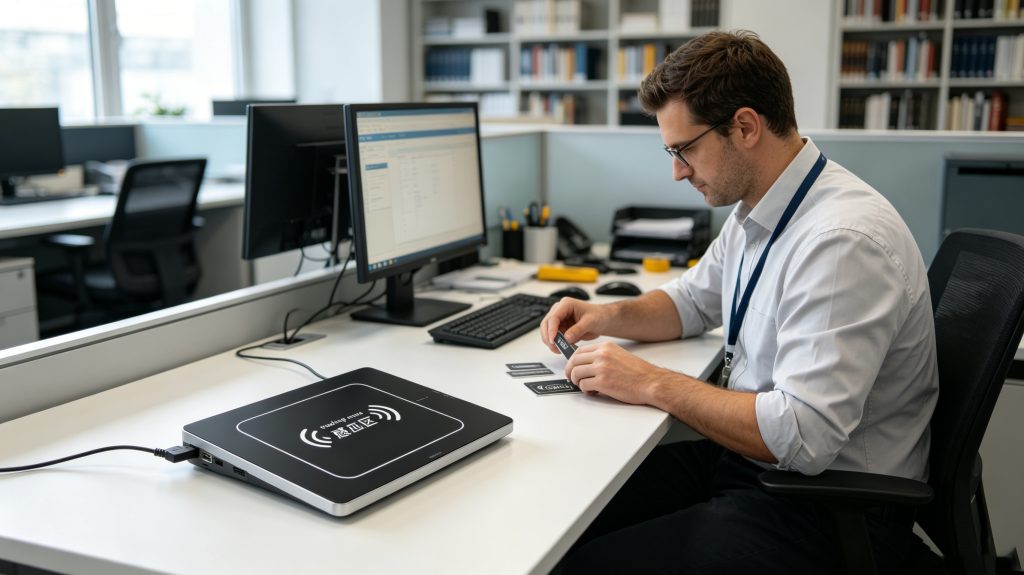
Technical Architecture of RFID Writer and Reader System
This desktop platform is not a generic reader—it integrates RF control + encoding logic + filtering layer.Core capabilities include:
According to ISO/IEC 18000-6C standards (IS
 rg), UHF Gen2 systems are designed for high-speed anti-collision and structured EPC memory writing, which is essential for batch encoding environments.
Signal Processing and Anti-Collision Performance
In real-world encoding rooms, multiple tags often overlap in the field.The system uses:
From field observation, RSSI filtering is particularly important in dense tag stacks—especially when operators place multiple labels at once on the desktop antenna zone.
Application Scenarios in Operational Environments
This RFID writer and reader desktop system is widely used in:Each scenario shares one requirement: controlled identity creation at the source.
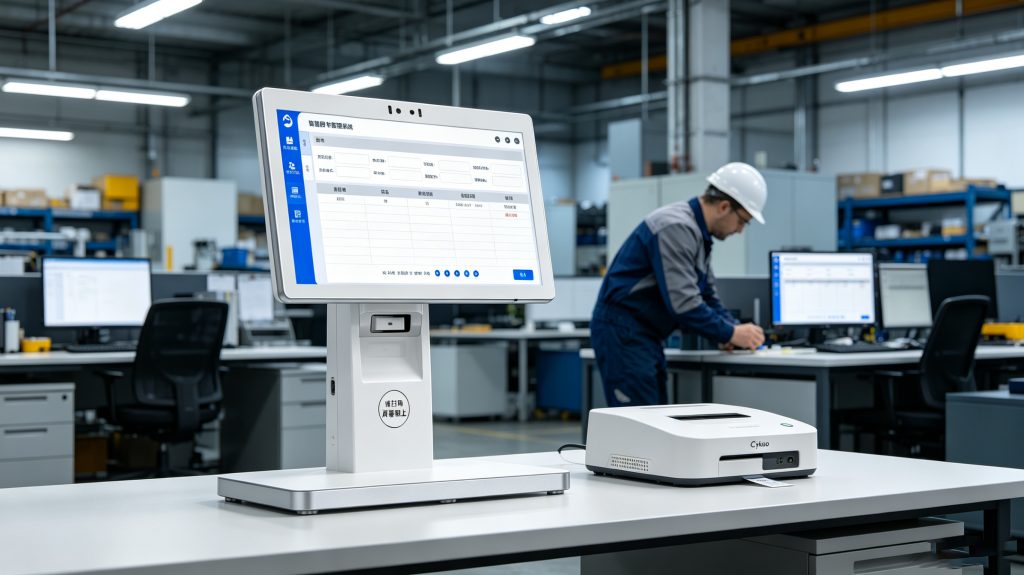
Software Integration and Developer Access
A key advantage of this platform is its developer accessibility.It provides:
In enterprise deployments, this reduces integration time significantly—especially when connecting to ERP or inventory systems.
Operational Behavior in Real Use
Unlike high-range industrial readers, this desktop system behaves like a precision RF writing station:This is critical in environments where tag accuracy is more important than scanning distance.
Data Reference and Industry Standards
RFID UHF systems used in encoding platforms follow global standards:GS1 notes that EPC-based identification enables interoperable supply chain identity management across industries, while ISO defines communication reliability and anti-collision behavior in UHF environments.
FAQ: RFID Writer and Reader
Can RFID writer and reader encode multiple tags at once?
Yes, the desktop system supports multi-tag recognition and batch encoding with anti-collision processing.What is the writing range of the device?
Is it suitable for library or tool management?
Yes, it is widely used in structured environments like libraries, tool rooms, and asset registration stations.At the edge of asset digitization workflows, the rfid writer and reader is not just a device—it is the controlled identity creation point for modern RFID ecosystems.


评论
发表评论