What is uhf adhesive rfid label tag?
A uhf adhesive rfid label tag uses ultra high frequency RFID technology to enable fast, contactless, and large-scale identification of inventory, logistics cartons, retail products, and industrial assets.
The first thing most people notice about RFID labels is how small they are.
The second thing they notice is how quickly operations change once thousands of them start moving through a warehouse.
At Cykeo, we have watched facilities transition from barcode bottlenecks to fully automated RFID inventory workflows in surprisingly short periods. Not because RFID is flashy. Most operators barely talk about it after deployment.
The real difference appears in movement.
Forklifts stop waiting for manual scans. Inventory audits shrink from hours into minutes. Shipping teams stop arguing about whether products were actually loaded onto outbound pallets.
Quiet improvements. Repeated thousands of times daily.
That is where UHF RFID becomes valuable.
Why businesses are adopting UHF adhesive RFID labels
Inventory visibility has become a pressure point across retail, logistics, manufacturing, and healthcare industries.
Manual inventory systems cannot easily keep pace with modern supply chain speed.
According to, RFID adoption continues increasing globally because companies require more accurate and automated product visibility across supply chains.
Meanwhile, reports that real-time inventory transparency significantly improves operational responsiveness and reduces fulfillment inefficiencies.
Inside real warehouses, those reports translate into something simpler:
Workers spend less time scanning individual boxes.
How a UHF adhesive RFID label tag works
Ultra high frequency RFID identification
Cykeo UHF adhesive RFID labels operate between 860–960 MHz under EPC Gen2 / ISO18000-6C standards.
Each RFID label contains:
Once attached to cartons, assets, products, or equipment, the labels communicate wirelessly with RFID readers.
Unlike barcodes, RFID does not require direct visual alignment.
Multiple labels can be identified simultaneously.
That matters more than people expect.
A warehouse deployment that changed faster than expected
One apparel distribution center we worked with originally planned to use RFID only for outbound shipping verification.
Their expectation was modest.
Reduce scanning labor. Improve shipping accuracy slightly.
But within two months, supervisors noticed something unexpected during weekly inventory checks. Workers began using RFID handheld readers for informal stock verification because it was faster than relying on spreadsheets.
The behavior shift happened naturally.
Nobody instructed employees to do it.
Once inventory visibility becomes easier, people stop avoiding it.
That tends to happen with successful RFID systems.
Key advantages of UHF adhesive RFID labels
| RFID Capability | Operational Benefit |
|---|---|
| Multi-label identification | Faster inventory processing |
| Long-distance reading | Reduced manual scanning |
| Contactless detection | Improved workflow efficiency |
| Real-time visibility | Better inventory accuracy |
| Adhesive installation | Easy deployment on products |
| Bulk inventory reading | Faster warehouse audits |
In busy logistics environments, seconds matter.
Across thousands of products, they matter even more.
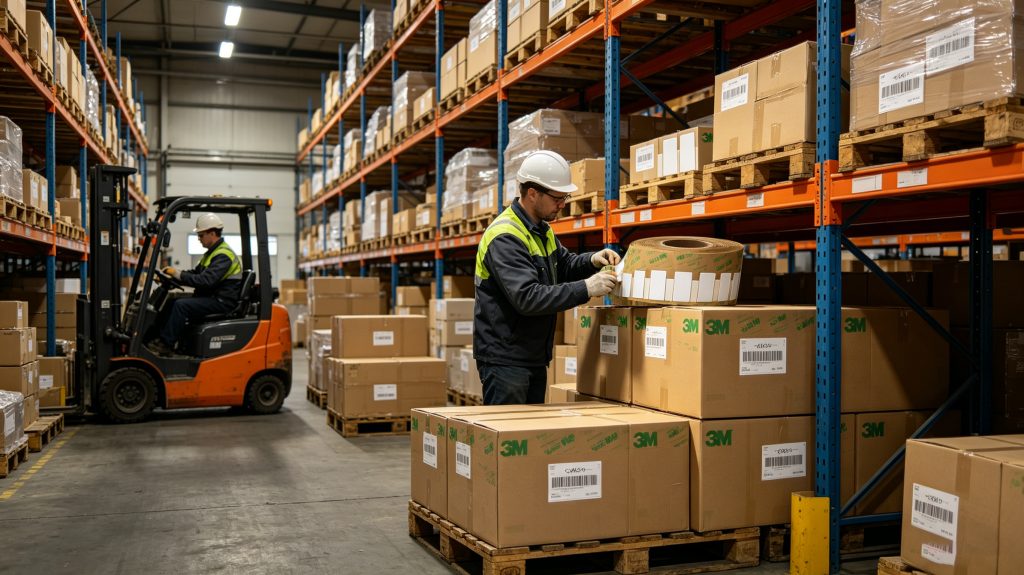
UHF RFID adhesive labels simplify warehouse inventory tracking and logistics visibility.
Where UHF adhesive RFID labels perform best
Retail inventory management
Retail companies use RFID labels for:
RFID helps improve stock visibility between stores and distribution centers.
Warehouse logistics
Logistics facilities benefit from rapid pallet and carton identification.
Bulk RFID scanning reduces loading errors significantly.
Manufacturing environments
Manufacturers use RFID adhesive labels to track:
Especially useful in high-volume production facilities.
Why ultra high frequency RFID matters
Not all RFID systems perform equally.
Ultra high frequency RFID offers several operational advantages:
A worker moving an entire cart of tagged products through an RFID gate can trigger hundreds of simultaneous reads within seconds.
Barcode systems struggle to achieve that speed consistently.
That difference becomes substantial in large operations.
What companies often underestimate
Most RFID discussions focus heavily on hardware specifications.
But real deployment success depends more on environmental testing.
Metal shelving, liquid products, packaging density, and reader positioning all affect performance.
At Cykeo, field adjustments during installation often determine whether a project becomes genuinely useful or simply technically functional.
Those are not always the same thing.
A perfectly engineered RFID system still fails if workers avoid using it.
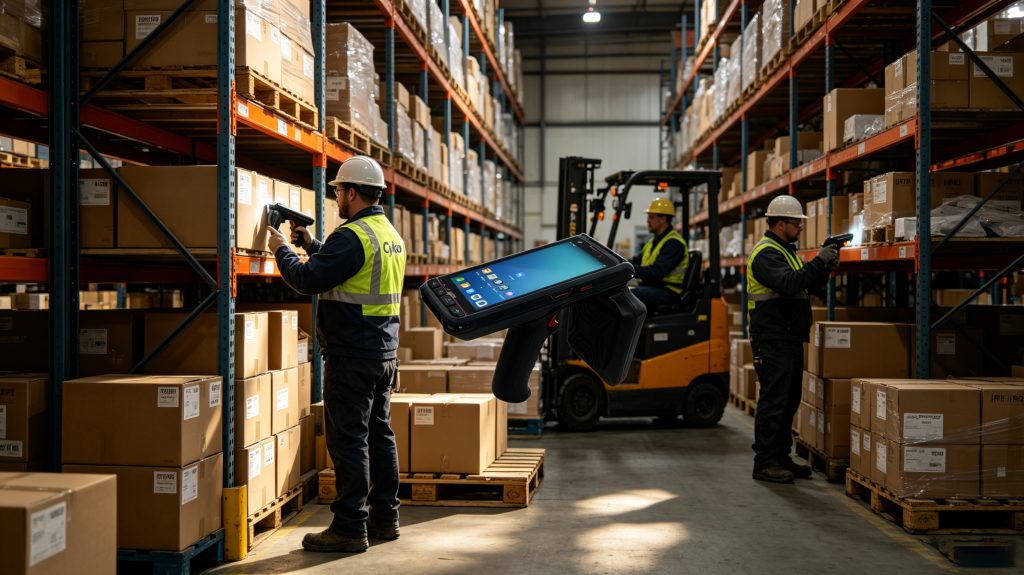
Handheld RFID readers improve inventory audit speed and operational visibility.
FAQ About uhf adhesive rfid label tag
What frequency does UHF RFID use?
Ultra high frequency RFID typically operates between 860 MHz and 960 MHz under EPC Gen2 standards.
Can adhesive RFID labels work on cardboard boxes?
Yes. Adhesive RFID labels are commonly applied to cartons, packaging, retail products, and warehouse inventory.
How far can UHF RFID labels be read?
Reading distance depends on tag design and environment, but UHF RFID can often achieve several meters of identification range.
Can RFID labels replace barcodes?
Many companies use RFID alongside barcodes during transition periods, although RFID provides faster bulk-reading advantages.
Final thoughts on uhf adhesive rfid label tag
A uhf adhesive rfid label tag is more than a tracking sticker.
Inside modern warehouses and supply chains, it becomes part of operational infrastructure itself.
Ultra high frequency RFID allows companies to identify products faster, reduce manual scanning workloads, and improve inventory visibility at scale. Over time, those improvements create smoother workflows that employees often notice before management metrics fully reflect them.
At Cykeo, the most effective RFID projects rarely feel complicated after deployment.
They simply make operations move with less resistance.
That is usually the clearest sign the system is doing its job.


评论
发表评论