What is rfid desk reader and applications?
A desk reader is a compact RFID desktop device used for ultra high frequency tag reading, encoding, asset registration, and secure item identification with fast and highly accurate data capture.
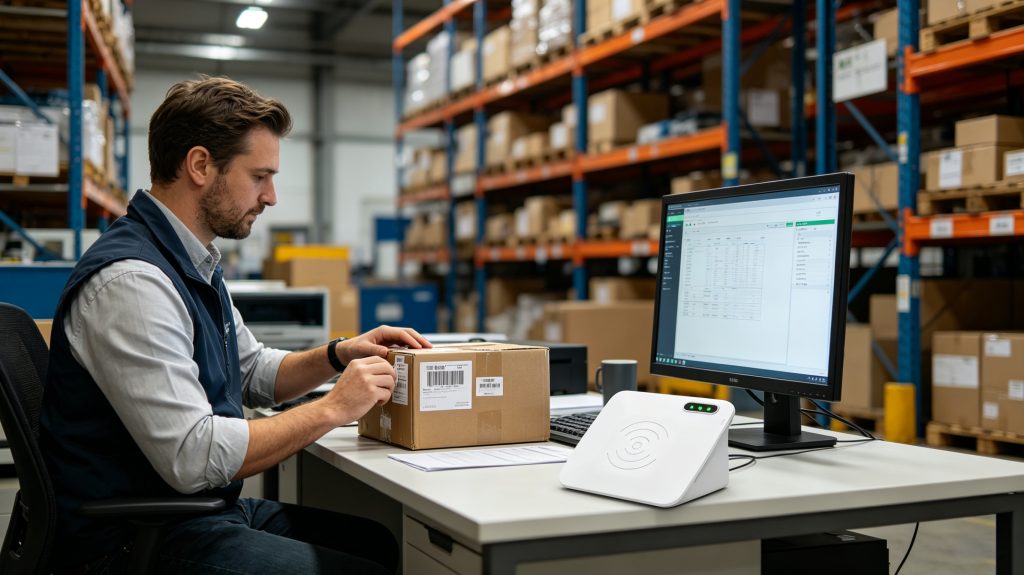
The first time I realized how much a desk reader could affect workflow efficiency was inside a spare-parts warehouse in Hamburg. Operators were still scanning barcode labels one by one at the registration desk while stacks of RFID-tagged components waited beside them. The delay was not dramatic at first glance. Ten seconds here. Five seconds there. But across an entire shift, the bottleneck became obvious.
After switching to a UHF RFID desk reader system, registration time dropped sharply. More importantly, error rates almost disappeared.
That experience stayed with me because desktop RFID equipment is often underestimated. People focus on handheld scanners or fixed tunnel systems. In reality, the desk reader is where clean data usually begins.
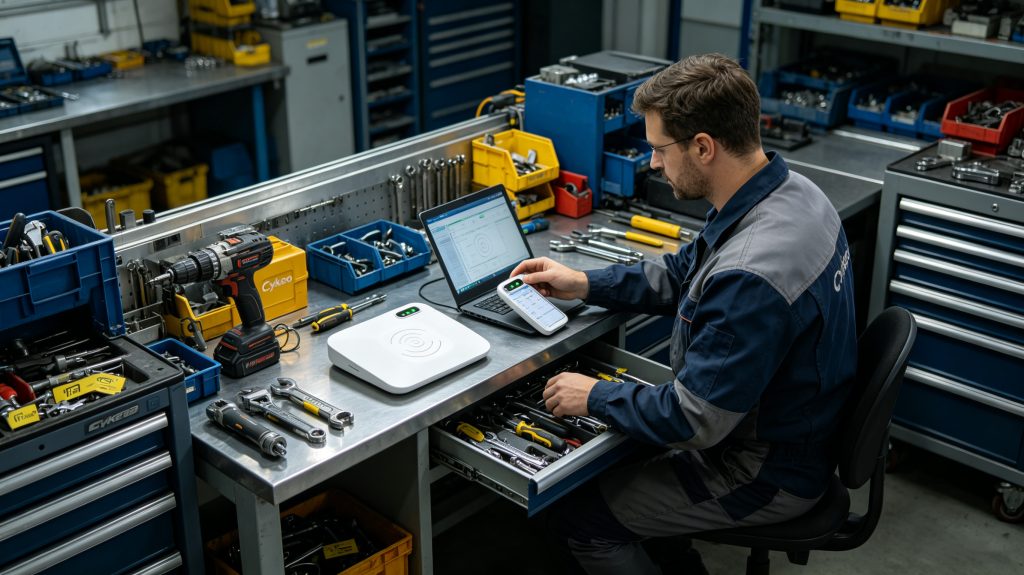
At Cykeo, we have deployed ultra high frequency RFID desktop readers in libraries, production facilities, IT asset centers, tool rooms, and document archives. The environments differ, but the operational pressure is surprisingly similar: fast registration, controlled read zones, and reliable tag writing.
What Is a Desk Reader?
A desk reader is a desktop RFID device designed for:Unlike long-range gate readers, desk readers focus on controlled short-distance identification.
That distinction matters.
In UHF deployments, uncontrolled reading can create duplicate scans or accidental data capture from nearby tagged items. A properly designed desk reader uses near-field antenna control to keep the reading zone stable and predictable.
Common Desk Reader Applications
| Industry | Typical Use |
|---|---|
| Warehousing | Asset registration |
| Libraries | Book circulation |
| Healthcare | Medical equipment tracking |
| Manufacturing | Tool identification |
| IT Management | Server asset tagging |
Why UHF Desk Readers Matter in Daily Operations
One operational detail often gets ignored: read stability.A handheld reader may capture unwanted nearby tags during close-range operations. A well-designed desk reader avoids that by limiting the effective detection field.
Cykeo desktop systems use near-field antenna optimization specifically for this reason.
During testing inside a European electronics assembly facility, operators needed to encode sensitive RFID labels placed only centimeters apart. Traditional open-range antennas created repeated tag collisions. After switching to a controlled desktop UHF reader configuration, write success rates improved noticeably.
That kind of improvement is difficult to explain in marketing language. Operators simply notice fewer interruptions.
Key Features of a Modern UHF Desk Reader
Many Cykeo desktop readers also support:desk reader Performance in High-Density RFID Environments
Controlled Reading Distance
One major advantage of a desk reader is reading precision.Typical controlled reading ranges:
That narrow zone is intentional.
In archive rooms or equipment counters, operators often work with dozens of RFID-tagged objects on the same table. Short-range UHF control prevents cross-reading.
According to GS1 Official Website, RFID improves inventory visibility and operational efficiency significantly when data capture accuracy is maintained consistently.
Real-World desk reader Usage Scenarios
Library and Archive Management
Libraries often prefer desktop RFID systems because:In one archive project, operators mentioned something interesting after deployment. The biggest benefit was not speed. It was reduced fatigue. Repeated barcode aiming disappeared entirely.
Small operational changes often matter most over long shifts.
IT Asset Registration
Desktop readers are increasingly used for:Especially inside IT rooms, compact RFID control is critical because metallic surfaces and nearby devices can interfere with open-range antennas.
That is why near-field UHF design matters more than raw output power alone.
Choosing the Right UHF Desk Reader
Important Selection Factors
| Feature | Recommendation |
| RFID Protocol | EPC Gen2 / ISO18000-6C |
| Communication | USB or Bluetooth |
| Antenna Design | Near-field optimized |
| SDK Support | Java / C# |
| Write Stability | High success rate |
| Filtering Support | Required for batch operations |
That operational smoothness usually separates industrial-grade systems from consumer-level hardware.
FAQ About desk reader
What is a desk reader used for?
A desk reader is used for RFID tag reading, writing, asset registration, inventory management, and secure identification operations.Why use UHF RFID in a desktop reader?
UHF RFID supports faster identification, better batch processing, and higher operational efficiency compared to manual barcode systems.Can a desk reader write RFID tags?
Yes. Most industrial desktop RFID readers support both reading and encoding EPC RFID tags.Is a desk reader suitable for libraries?
Yes. Libraries frequently use desktop RFID readers for book registration, circulation, and inventory management.What industries use desk readers most?
Warehousing, healthcare, manufacturing, libraries, IT asset management, and logistics operations widely use desktop RFID systems.Final Thoughts on desk reader Systems
The desk reader rarely receives attention compared to large RFID gates or handheld scanners. Yet it quietly controls one of the most important parts of RFID deployment: accurate data entry.When encoding fails, when duplicate tags appear, or when nearby items interfere with registration, the entire tracking chain becomes unreliable.
That is why industrial-grade UHF desk readers focus less on maximum distance and more on controlled precision.
At Cykeo, we continue refining ultra high frequency desktop RFID systems specifically for stable daily operation — not just laboratory testing. Real environments are noisy, crowded, metallic, and unpredictable. Good RFID equipment has to survive those conditions without slowing operators down.
That is where a reliable desk reader proves its value.


评论
发表评论