RFID Reader Module for Library Management Systems: Why More Libraries Are Moving Toward Embedded RFID
Libraries handle much more inventory movement than most people realize.
Books are constantly borrowed, returned, sorted, relocated, archived, and reshelved throughout the day. In large public libraries, universities, and archive centers, keeping track of everything manually becomes difficult very quickly.
That’s why RFID has become one of the most widely adopted technologies in modern library management systems.
And increasingly, the hardware behind these systems is no longer a large standalone reader sitting beside a checkout desk.
More libraries and equipment manufacturers are embedding RFID reader modules directly inside kiosks, return stations, sorting equipment, and smart shelving systems.
Why Barcode-Based Library Systems Create Bottlenecks
Traditional barcode systems still work, but they depend heavily on manual operation.Staff or visitors must:
This slows down circulation, especially during busy periods.
RFID changes the process because books can be identified automatically without line-of-sight scanning.
Multiple books can be processed at the same time, which significantly improves efficiency.
Common RFID Applications in Libraries
RFID is now used across many different library workflows.Self-Checkout Kiosks
Visitors can borrow multiple books simultaneously without staff assistance.The RFID system automatically identifies all tagged items placed on the checkout surface.
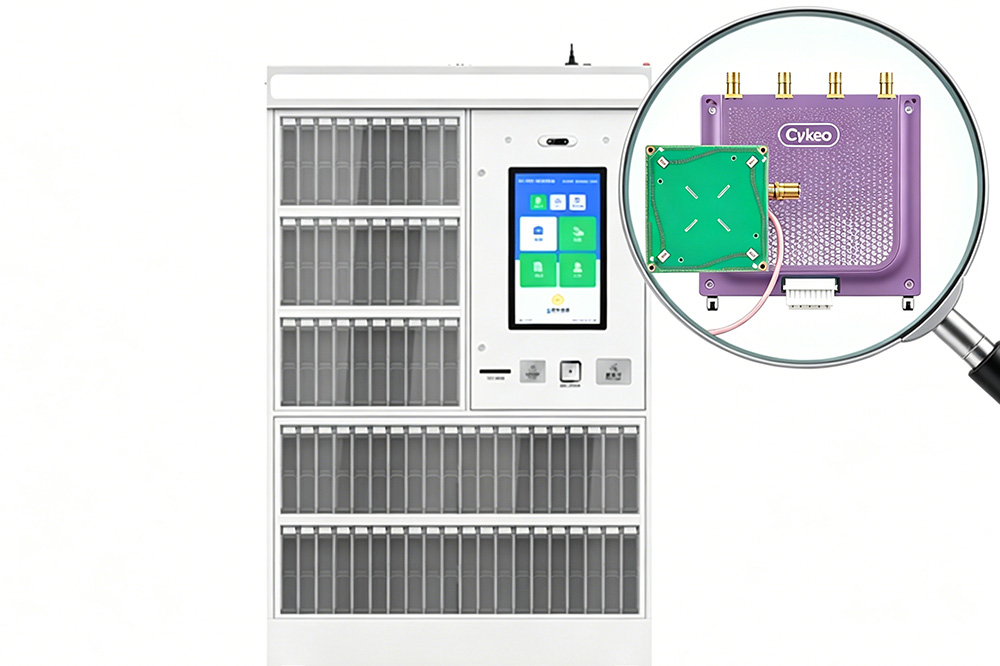
Automated Return Stations
RFID return systems help automate:without requiring manual scanning.
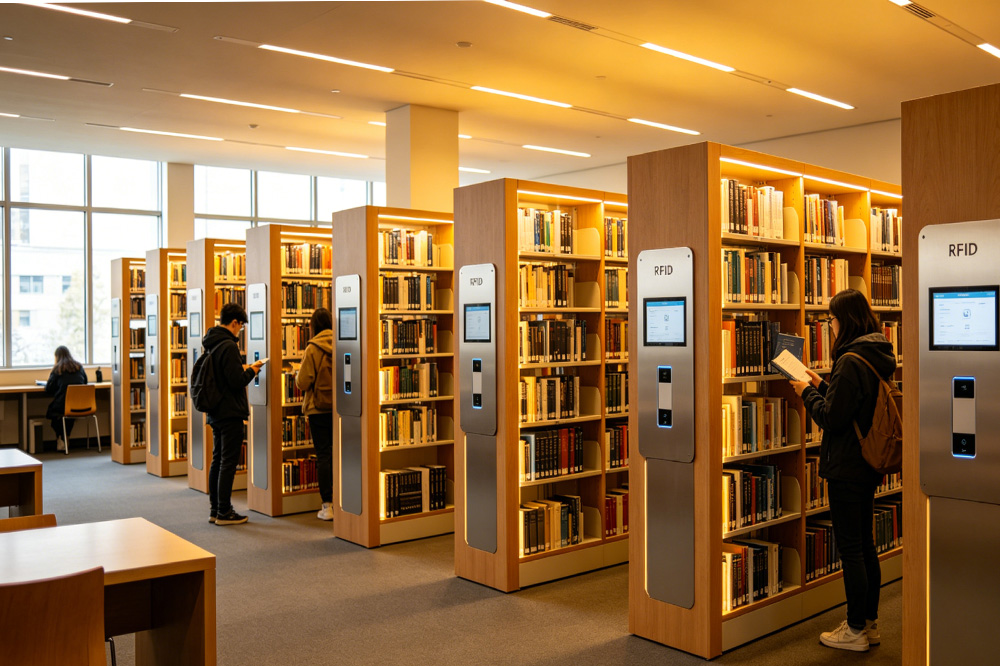
Smart Shelf Inventory Management
Some libraries now use RFID-enabled shelves to monitor:in real time.
Why More Library Systems Use Embedded RFID Modules
Earlier RFID library systems often depended on large external readers mounted beside circulation desks.Now, more manufacturers are embedding RFID modules directly inside:
This provides more flexibility for:
For organizations comparing hardware approaches, this guide explains the practical difference between RFID modules and standalone readers:rfid module vs rfid reader whats the difference
It’s especially useful for OEM developers building embedded RFID systems for public infrastructure.
Libraries Create RFID Challenges Too
Libraries may look simple compared to factories or warehouses, but they still create several RF challenges.Especially because systems operate around:
These conditions can affect:
That’s why library RFID systems still require extensive real-world testing before deployment.
Antenna Layout Usually Determines System Stability
Many unstable RFID library systems are actually suffering from poor antenna design.Especially in compact self-checkout kiosks and automated return systems where space is limited.
Integrators often spend time adjusting:
Even small antenna changes can significantly improve reading accuracy.
Multi-Book Reading Is Essential
Library RFID systems rarely process one item at a time.Visitors often place:
onto the checkout area simultaneously.
This is where anti-collision performance becomes critical.
Poor multi-tag handling can create:
which directly affects circulation accuracy.
RFID Modules Are Becoming Smaller and Easier to Integrate
One reason embedded RFID adoption is growing in libraries is hardware miniaturization.Modern RFID modules are now compact enough to fit inside:
without requiring large external readers.
You can see examples of RFID modules designed for embedded integration here: rfid modules
These types of modules are widely used in smart infrastructure and automated inventory systems.
Software Integration Usually Becomes the Bigger Challenge
The RFID hardware is only part of the system.Most RFID library deployments also integrate with:
This is where SDK quality becomes extremely important.
Poor software integration often creates more operational problems than the RFID hardware itself.
For developers interested in understanding RFID hardware architecture more deeply, this guide explains how RFID reader modules are designed internally:how to make rfid reader module
Many RFID Library Projects Start as Small Prototypes
A surprising number of RFID library systems begin as small pilot projects.Developers and universities often experiment using:
before scaling into full deployments.
That testing stage is usually where engineers first learn how RFID behaves around dense tag environments and compact public equipment.
For smaller embedded RFID projects and development experiments, this Arduino-compatible RFID guide is a useful reference:best arduino compatible rfid readers for diy enthusiasts top 5 picks
UHF RFID Is Expanding Into Smart Public Infrastructure
Many newer library systems are adopting UHF RFID because it supports:That’s why embedded UHF RFID modules are increasingly being integrated directly into modern library infrastructure itself.
For more examples of how UHF RFID modules are used in real operational environments, this article explores practical deployment scenarios across multiple industries:UHF RFID Reader Module,Real-World Solutions for Modern Operations
Real Library RFID Systems Depend on Testing
Library RFID systems usually require several rounds of tuning before deployment.Integrators often adjust:
before achieving stable operation.
That process is completely normal.
The systems that perform reliably long-term are usually the ones that went through enough real-world testing before rollout.
Final Thoughts
Libraries are becoming more automated while trying to maintain fast and convenient visitor experiences.Instead of relying entirely on manual barcode workflows, more institutions are embedding RFID directly into checkout kiosks, shelves, sorting systems, and public infrastructure itself.
And in many of those deployments, the RFID reader module is quietly handling identification, circulation tracking, and inventory visibility behind the scenes every day.


评论
发表评论