RFID Cross Reading Problem — most systems don’t fail where people think
There was one warehouse project I still remember clearly, not because it was complex, but because it was slightly annoying to debug.
Everything looked normal.
Two gates installed. UHF system running. Rfid Tags responding fine.
But the inventory records were… messy.
A pallet moving through Gate A would sometimes appear in Gate B’s logs. Even worse, sometimes tags from a nearby staging area were getting picked up during peak traffic. Nobody noticed it at first. Then someone compared timestamps and things stopped making sense.
At that point, people usually start blaming the RFID system.
Or the rfid antennas.
Or the rfid reader.
But it didn’t feel like a “broken device” situation.
More like a control problem.
The “cross reading” issue usually doesn’t look like a failure at first
RFID cross reading problems are a bit deceptive.
It doesn’t crash. It doesn’t stop working.
It just slowly becomes unreliable.
You see things like:
- tags showing up in the wrong zone
- duplicate reads across different gates
- inventory records not matching physical flow
- occasional “ghost reads” when nothing is passing through
One operator told me it feels like the system is “guessing”.
That’s not far from what it looks like on the dashboard.
Why it happens
The instinct is often:
maybe we need a better reader
But in most warehouse setups, the reader is not the real problem.
The environment is.
RF signals don’t respect physical assumptions like:
- “this is one lane”
- “this is one gate area”
- “this tag should only respond here”
In reality, RF energy spreads.
And in warehouses, there are a few things that make it worse:
Metal racks reflecting signals
Tags facing random directions
Forklifts carrying reflective loads
Adjacent lanes too close together
High-power settings left unchanged after installation
Sometimes even the layout that looked “clean on CAD drawing” becomes messy in real movement.
I’ve seen cases where just walking speed of operators changed the read pattern slightly. Not dramatically, but enough to create confusion over time.
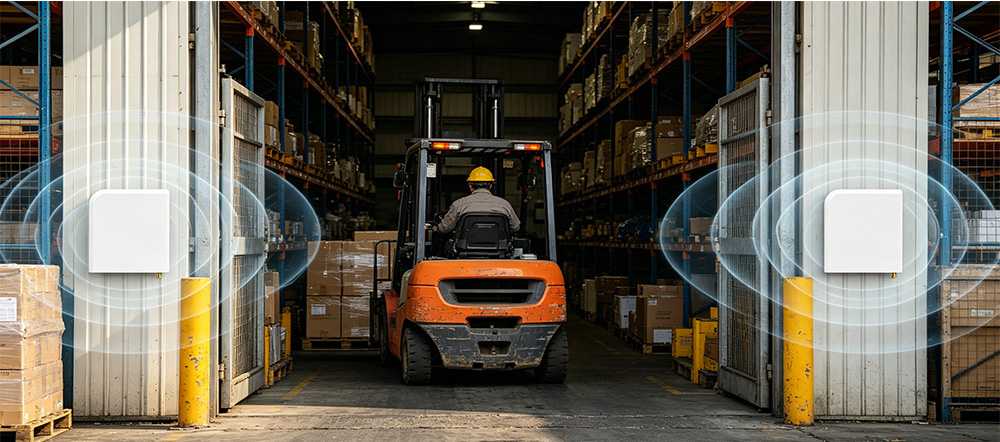
Directional RFID antenna changes the problem slightly — but not in a magical way
People sometimes expect directional antennas to “fix everything”.
That’s not really how it behaves.
What it actually does is simpler:
It reduces where the system is “paying attention”.
Instead of radiating everywhere, the energy gets pushed into a more controlled direction. In practical terms, it starts acting like a constrained reading corridor instead of a wide open field.
In one case, we replaced a standard setup with directional antennas at a loading dock.
The immediate change wasn’t dramatic.
But over a few days, the “random reads from side racks” started disappearing. Not fully gone at first, just less frequent. Then it became stable enough that the team stopped talking about it.
That silence usually means something improved.
Beam width behaves differently in real warehouses
On paper, beam angles are clean:
30°, 60°, 90°.
In reality, things get less predictable.
A 60° antenna might still pick up tags from the next lane if:
- metal is reflecting signal sideways
- tags are angled toward the antenna
- height is slightly off
- power is not tuned after installation
I once saw a setup where the beam looked “correct” during testing, but during real pallet movement, the edge of the beam was catching unintended tags.
It wasn’t obvious until someone stood at the gate during operation and watched the system behavior manually.
Software filtering was tried first.
It helped a bit.
But the real improvement came after adjusting antenna orientation, not replacing hardware.
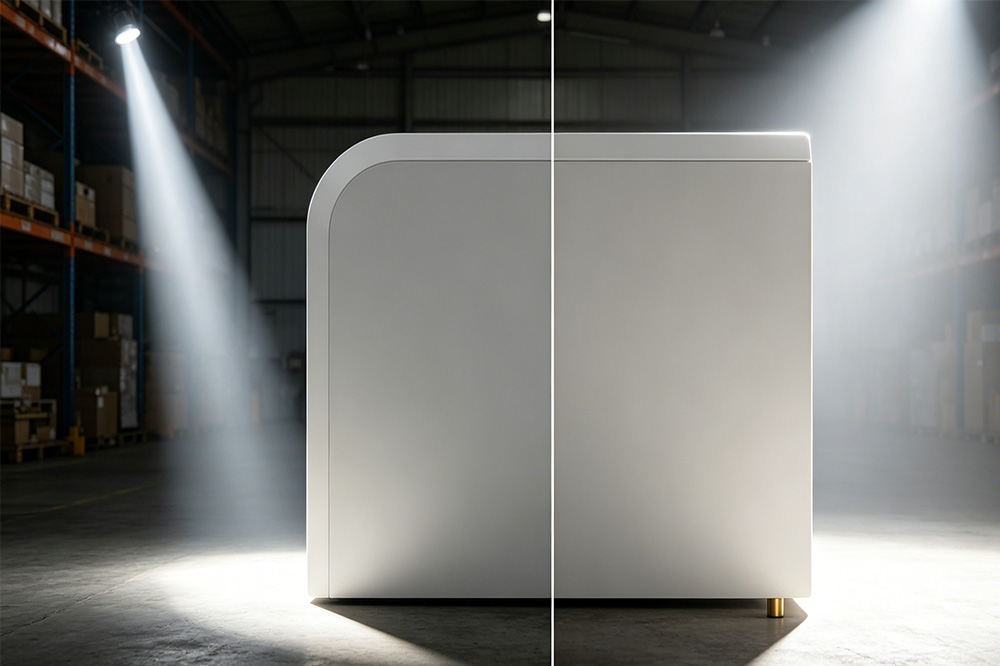
Installation details matter more than equipment changes
This is something people often resist at first.
Because replacing hardware feels more “definitive”.
But in RFID gate systems, small physical adjustments can change everything:
A slight tilt downward reduces spillover
Moving antenna height changes reflection patterns
Shifting distance between antennas narrows overlap zones
Even cable routing sometimes affects stability (rare, but it happens in noisy environments)
I remember one warehouse where the antennas were mounted just a bit too flat. Nothing looked wrong visually. But the system kept reading tags from outside the intended lane.
After adjusting the angle slightly downward, the cross reading issue reduced noticeably.
No firmware update.
No reader replacement.
Just a change in direction.
When directional antennas are not enough
There are cases where even directional antennas don’t fully solve it.
Usually when:
- warehouse layout is too tight
- multiple gates are too close
- tags are inconsistent in placement
- metal density is extremely high
- power levels are not coordinated across readers
In those cases, the system needs more than antennas.
It needs layout thinking.
Sometimes even traffic flow needs to be adjusted slightly, which is not always easy in real operations.
Why integrators still prefer directional antennas anyway
Even with limitations, most system integrators still lean toward directional RFID antennas in gate systems.
Not because they are perfect.
But because they make behavior more predictable.
And predictability is often more valuable than maximum range.
For wholesalers or solution providers, this is usually where discussions shift from “spec comparison” to “deployment consistency”.
Some OEM/ODM-focused suppliers working with RFID automation projects, including systems like those from Cykeo, tend to position antennas not as standalone hardware, but as part of a controlled reading environment.
That mindset is usually closer to what integrators actually need in field deployment.


评论
发表评论