RFID Medical Inventory Management System: How Hospitals Actually Keep Track of Supplies
Inventory Is Where Things Usually Go Wrong
If equipment tracking feels messy, inventory is usually worse.
At least with equipment, you’re dealing with visible items. With inventory—especially consumables—things move faster, in larger quantities, and often without clear records.
I’ve seen situations where:
- The system says stock is available, but shelves are empty
- Supplies run out earlier than expected
- Departments keep their own “hidden stock” just to be safe
None of this happens because people are careless. It happens because manual tracking just doesn’t keep up.
That’s exactly where an RFID medical inventory management system starts to make sense.

What an RFID Inventory System Actually Does
At a glance, it sounds similar to asset tracking—but the focus is different.
Instead of asking “Where is this device?”, inventory systems ask:
- What do we have right now?
- What was used today?
- What needs restocking soon?
RFID handles this by automatically recording item movement—especially at the point where items are stored or accessed.
That last part is important.
Because in inventory management, where tracking happens matters more than how tracking works.
Why Manual Inventory Systems Fall Behind
Most hospitals still rely on some combination of:
- Periodic stock counts
- Manual entry
- Barcode scanning
The problem isn’t that these methods are wrong. It’s that they’re always slightly out of sync with reality.
Items get used but not recorded.
Stock gets moved without updates.
Counts are accurate—until the next shift.
Over time, small mismatches turn into larger gaps.
RFID doesn’t eliminate all errors, but it reduces the number of “missed events” significantly.
The Shift: From Recording Inventory to Capturing Movement
One thing that’s easy to overlook is this:
Traditional systems record inventory after something happens.
RFID captures it as it happens.
That sounds subtle, but it changes the entire workflow.
Instead of relying on someone to log usage later, the system records it immediately when the item leaves storage.
This is why many hospitals don’t just use open RFID tracking—they combine it with controlled storage.
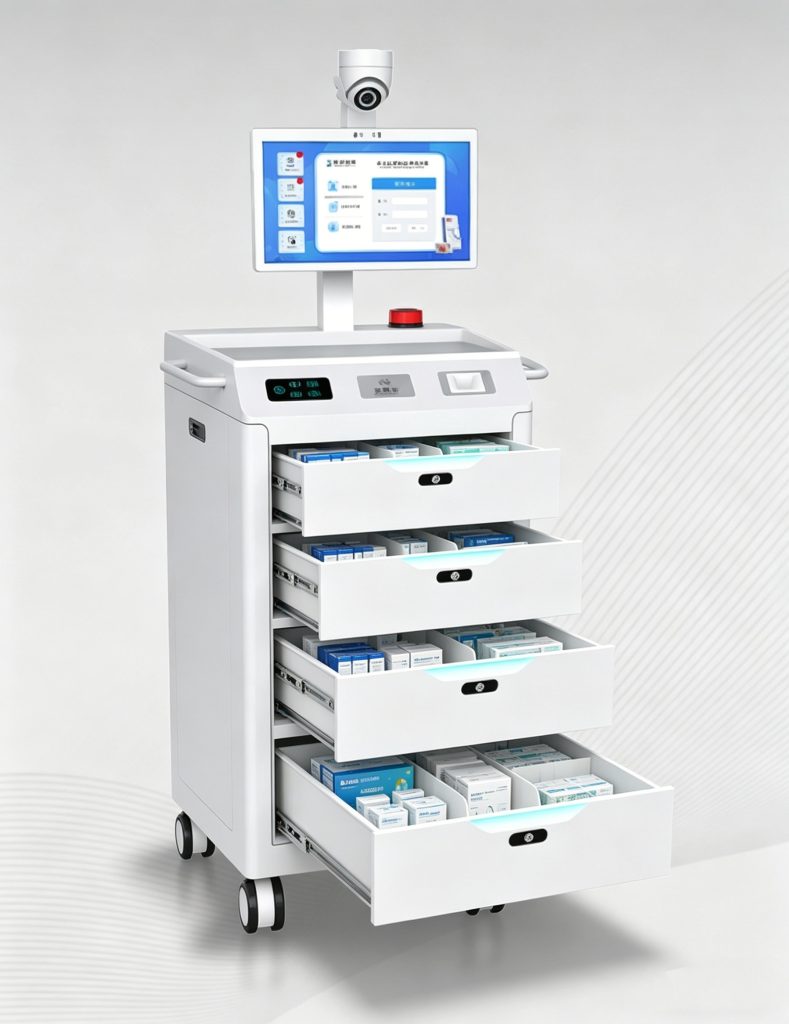
Where RFID Smart Cabinets Come In
In practice, inventory accuracy often depends on storage, not tracking.
That’s why many hospitals implement an RFID medical cabinet system as part of their inventory setup.
These cabinets automatically:
- Detect items placed inside
- Record items when they are removed
- Update inventory levels in real time
No scanning. No manual input.
From what I’ve seen, this setup solves a very specific problem:
not knowing what’s actually been taken.
And once that’s solved, inventory data becomes much more reliable.
What Improves After Implementation
RFID inventory systems don’t make everything perfect overnight. But a few changes tend to show up pretty quickly.
Stock levels become more trustworthy
Staff stop second-guessing the system.
Fewer emergency shortages
Because usage trends become visible earlier.
Less overstocking “just in case”
Departments rely less on buffer stock.
Inventory checks take less time
Because much of the data is already recorded automatically.
These aren’t dramatic changes individually—but together, they reduce a lot of daily friction.
Not All Inventory Needs RFID
Just like equipment tracking, inventory tracking doesn’t need to cover everything.
RFID is usually most useful for:
- High-value consumables
- Frequently used medical supplies
- Items with strict usage control
- Supplies shared across departments
For low-cost, high-volume items, simpler methods often still make sense.
Trying to apply RFID to everything can add complexity without much benefit.
A Practical Challenge: Balancing Control and Convenience
One thing that comes up often is this trade-off:
The more control you add, the more steps staff have to follow.
If accessing supplies becomes too complicated, people find workarounds. And that defeats the purpose.
This is where smart cabinets tend to work better than manual systems.
They add control—but without adding extra actions.
Staff still open the cabinet and take what they need.
The system just records it automatically in the background.
Implementation Isn’t Just About Technology
A lot of RFID projects focus heavily on hardware—tags, readers, software.
But in inventory systems, process design matters just as much.
Some questions that usually come up:
- Where should items be stored?
- Who should have access?
- What level of tracking detail is actually useful?
Without clear answers, even a good system can feel confusing.
With a simple structure, the same system becomes much easier to use.
A Simple Way to Think About RFID Inventory Systems
If you strip it down, the idea is pretty straightforward:
Instead of asking people to keep inventory accurate,
you design a system where inventory updates itself.
That’s really what RFID is doing here.
Not replacing people—but removing the need for them to do repetitive tracking work.
Final Thoughts
RFID medical inventory management systems don’t fix inventory problems by adding more control.
They fix them by reducing the gap between what’s happening and what’s being recorded.
Once that gap gets smaller, everything else—planning, purchasing, daily operations—starts to improve naturally.
And in most hospitals, that’s where the real value shows up:
not in the technology itself, but in the fact that the data finally reflects reality.


评论
发表评论