How to achieve inventory management use rfid tags
Inventory management RFID tags enable real-time asset tracking with high accuracy, reducing manual counting errors while improving warehouse efficiency and visibility.
In most deployments we’ve observed in warehouse audits and industrial tooling rooms, inventory mismatch is not a “small error”—it accumulates. Even a 2–5% discrepancy can distort procurement cycles and slow down dispatch decisions. RFID-based tagging shifts this from reactive correction to continuous visibility.
At Cykeo, field integrations typically show inventory counting time dropping from hours to minutes once RFID tagging is properly structured and environment interference is controlled.
How inventory management RFID tags behave in real operations
RFID tags are not just identifiers. In inventory systems they act like persistent digital anchors attached to physical assets.
A typical workflow we see in deployments:
- Tags are encoded at entry (serial, batch, category)
- Items move freely without scanning at every checkpoint
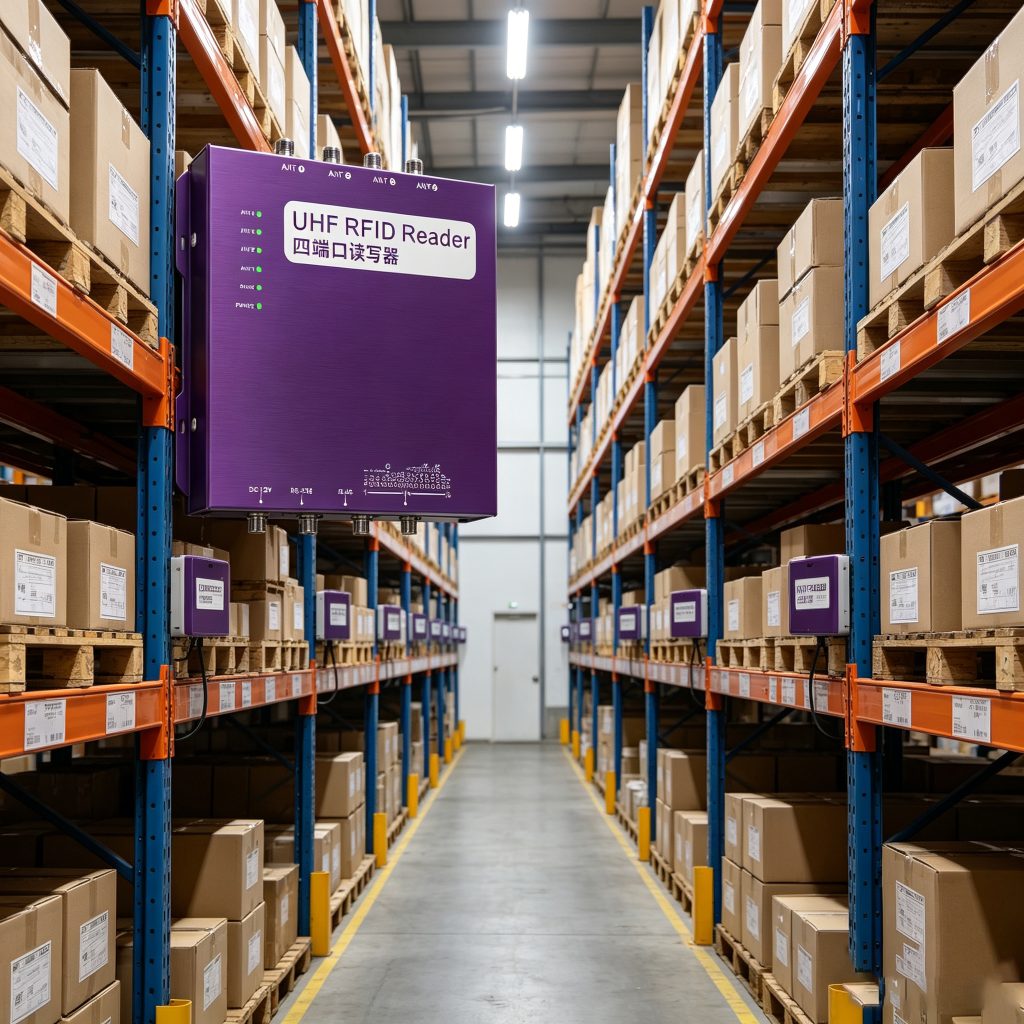
- Fixed readers or desktop stations capture movement automatically
- System updates inventory records in near real time
According to research published by GS1, RFID-enabled inventory systems can improve reading accuracy to over 98% in controlled environments, especially when UHF tags are used with optimized antenna layouts.

Where RFID inventory tags actually change outcomes
In practice, the biggest shift is not “speed”—it’s certainty under motion.
Common environments:
- Warehouse shelving systems
- Tooling rooms and maintenance depots
- Retail back-end stock rooms
- Manufacturing WIP (work-in-progress) zones
We’ve seen cases where forklifts moving tagged pallets no longer require manual checkpoint scanning. Instead, portal readers capture movement automatically, reducing labor dependency at choke points.
Accuracy behavior under real conditions
RFID performance is often misunderstood as “perfect reading everywhere.” In reality, performance depends on:
- Tag orientation
- Material interference (metal/liquid)
- Reader power tuning
- Density of tagged items
Industry benchmarks RFID Journal report:
- UHF RFID read rates: 95%–99% in optimized setups
- Manual barcode systems: typically below 70–85% in high-volume environments
This gap becomes significant in large-scale inventory cycles where thousands of SKUs move daily.
Operational insight from deployments (Cykeo field note)
In a tooling warehouse deployment scenario:
- Before RFID: full inventory audit required ~6–8 hours
- After RFID tagging: same process reduced to ~20–30 minutes
- Error tracing time reduced by ~60–80%
The unexpected outcome was not speed—it was behavioral change. Staff stopped “pre-checking” inventory because the system itself became the reference layer.
Advantages of inventory management RFID tags
- Continuous visibility without manual scanning
- Reduced shrinkage and misplaced assets
- Faster audit cycles (daily → real-time capability)
- Better asset lifecycle tracking
- Scalable across multiple warehouses
FAQ: inventory management RFID tags
Q1: Do RFID tags require line-of-sight?
No. UHF RFID works without direct visibility, unlike barcodes.
Q2: Can RFID handle dense storage environments?
Yes, but antenna tuning and tag spacing are critical.
Q3: Are RFID tags reusable?
Many industrial tags are rewritable and reusable depending on chip type.
Conclusion from field perspective
Inventory management RFID tags are less about replacing barcodes and more about removing blind spots in movement-heavy environments. When properly deployed, they turn inventory from a periodic task into a continuous system signal—something closer to live data than static records.


评论
发表评论