4-Port vs 8-Port vs 16-Port UHF RFID Readers: Which One Do You Really Need?
Why Port Selection Matters More Than You Think
When selecting a UHF RFID tag reader, most buyers focus on:
- Read range
- Price
- Brand
But in real deployments, one factor often determines whether your system works properly:
Number of antenna ports
Choose too few — you’ll have blind spots.
Choose too many — you waste budget and complicate deployment.
For system integrators, port selection is not just a hardware choice —
it’s a system architecture decision.
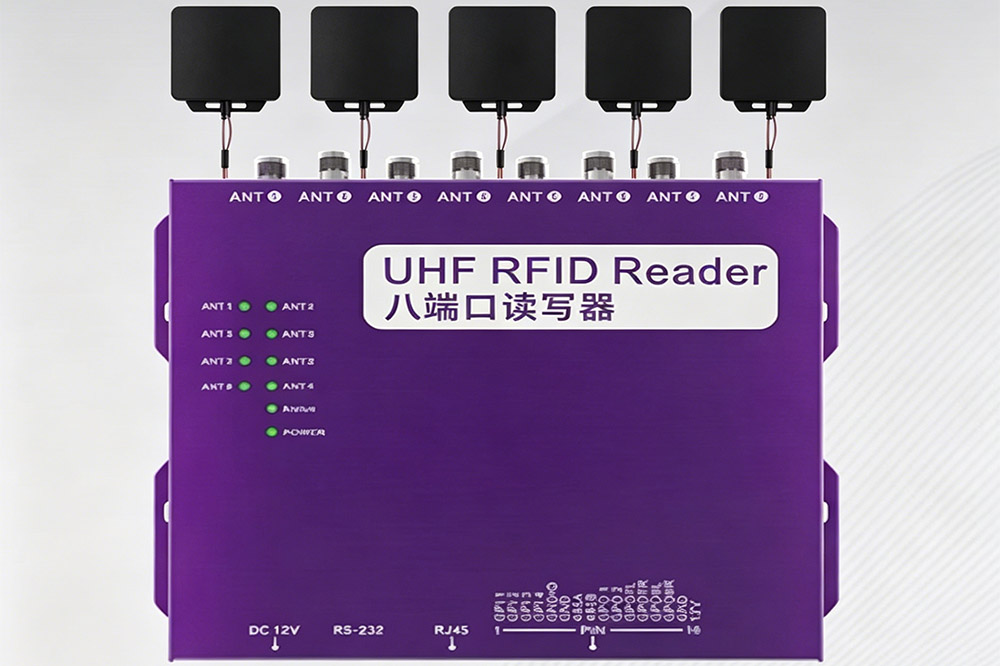
What Does “Port” Actually Mean?
Each port connects to one RFID antenna.
So:
- 4-port rfid reader → up to 4 antennas
- 8-port rfid reader → up to 8 antennas
- 16-port rfid reader → up to 16 antennas
Each antenna covers a specific read zone.
More ports = more coverage, but also more complexity.
4-Port RFID Reader: Best for Compact Systems
Typical Applications
- Smart rfid cabinets
- Tool tracking systems
- Small warehouse zones
- Access control points
Advantages
✔ Lower cost
✔ Easier setup
✔ Less interference
Limitations
❌ Limited coverage
❌ Not scalable for large systems
In controlled environments (like cabinets), 4 ports are often enough.
8-Port RFID Reader: The Most Balanced Choice
Typical Applications
- Warehouse shelves
- Multi-zone tracking
- RFID tunnels
- Medium-scale deployments
Advantages
✔ Good balance between cost and coverage
✔ Flexible antenna layout
✔ Suitable for most industrial projects
Limitations
❌ Slightly more complex configuration
For most B2B projects, this is the “safe choice.”
16-Port RFID Reader: Built for Large-Scale Systems
Typical Applications
- Large warehouses
- Logistics hubs
- Production lines
- High-density tracking environments
Advantages
✔ Maximum coverage
✔ Supports complex layouts
✔ Reduces number of readers needed
Limitations
❌ Higher upfront cost
❌ Requires careful antenna planning
Ideal when you want to centralize your system architecture.
Real-World Example: Warehouse Deployment
Let’s break it down simply.
Scenario:
- 10m × 30m warehouse area
- Multiple shelves
- Pallet tracking
Option A: 4-Port Readers
- Need multiple readers
- More network connections
- Higher installation complexity
Option B: 8-Port Reader
- Balanced coverage
- Moderate wiring
- Easier to manage
Option C: 16-Port Reader
- Fewer devices
- Centralized control
- Cleaner system design
In many cases, a single high-port reader reduces total system cost.

Antenna Layout Matters More Than Port Count
Even with 16 ports, poor antenna placement can ruin performance.
Key considerations:
- Antenna angle
- Distance between antennas
- Interference (especially metal)
- Tag orientation
A well-designed 4-port system can outperform a poorly designed 16-port setup.
Scalability: Think Beyond Your Current Project
Many buyers choose based on current needs only.
But RFID systems often expand.
Ask yourself:
- Will the system grow?
- Will you add more zones later?
- Will requirements change?
Choosing an expandable reader saves future replacement cost.
Recommended Approach
Instead of asking:
“Should I choose 4, 8, or 16 ports?”
Ask:
“How many read zones do I actually need?”
Then map:
- 1 zone = 1 antenna = 1 port
A Flexible Option for Different Projects
If you’re handling multiple projects or planning long-term deployment, using a flexible reader makes more sense.
For example:fixed rfid reader
This type of fixed UHF RFID reader supports:
- 4 / 8 / 16 port configurations
- Flexible antenna expansion
- Industrial-grade performance
- API / SDK integration
Most importantly:
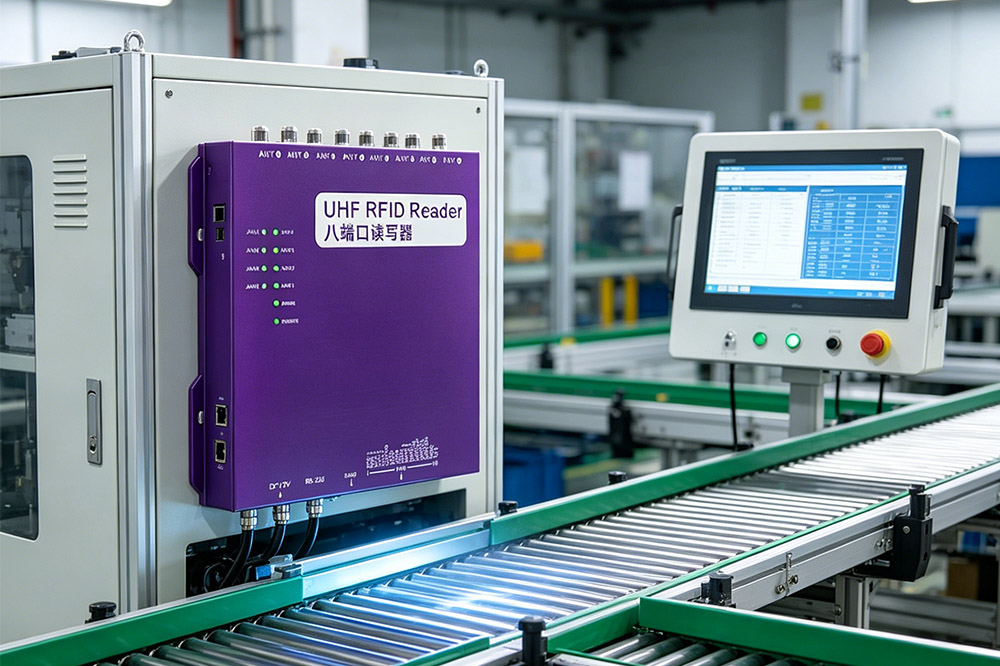
It can be integrated into any RFID system, including:
- RFID gate systems
- Smart cabinets
- Warehouse tracking systems
- Production lines
- Custom automation equipment
This makes it especially suitable for system integrators and OEM projects.
Common Mistakes When Choosing Port Numbers
Avoid these:
❌ Choosing minimum ports to save cost
❌ Ignoring future expansion
❌ Overestimating coverage per antenna
❌ Not testing real environment
These mistakes often lead to system redesign — which is far more expensive.
Final Thoughts: There’s No “Best,” Only “Fit”
- 4-port → compact, controlled environments
- 8-port → most balanced choice
- 16-port → large, complex systems
The right choice depends on your layout, not just your budget.
Need Help Designing Your RFID Layout?
Instead of guessing, you can get a proper configuration plan.
Just provide:
- Application scenario
- Area size or layout
- Tag type
- Read requirements
And you can get:
✔ Recommended port configuration
✔ Antenna layout plan
✔ Reader selection
✔ System integration advice
This is usually the fastest way to avoid costly mistakes.


评论
发表评论