Which Applications Actually Need High-Memory RFID Tags?
A lot of buyers ask for “high-memory RFID tags” right away.
Most of the time, they don’t actually need them.
In many RFID setups, the tag just carries an ID, and everything else sits in a database. That’s cheaper, easier to manage, and works just fine.
So before going for high-memory tags, it’s worth asking one simple question:
Do you really need to store data on the tag itself?
If the answer is no, you’re probably overpaying.
But there are cases where high memory makes sense. Here are the ones we usually see in real projects.
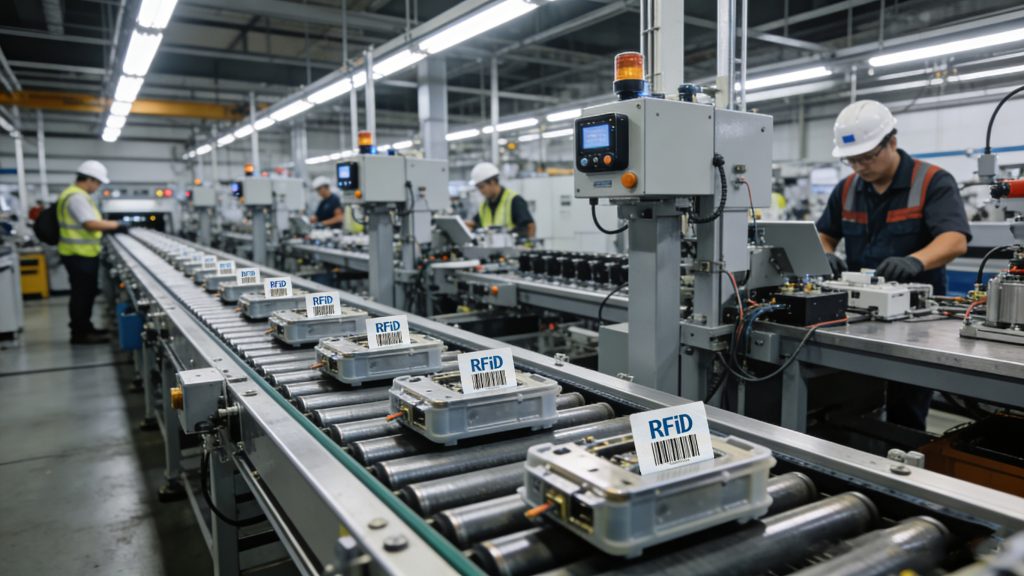
1. Manufacturing Lines Where Data Moves with the Product
In some production setups, items don’t stay in one system the whole time.
They move between stations, workshops, sometimes even different factories.
In those cases, relying only on a central system can be risky or inconvenient.
So instead, some manufacturers store data directly on the tag:
- process steps
- test results
- configuration info
That way, even if the system isn’t connected, the product still “knows” where it is in the process.
You’ll see this more in:
- automotive parts
- electronics
- complex assembly lines
2. Medical Equipment That Needs Traceability
Hospitals don’t always have perfect system access everywhere.
And for certain equipment, the history matters a lot.
Typical example:
- surgical tools
- reusable devices
Data written to the tag might include:
- sterilization records
- usage count
- maintenance history
So even without pulling up a system, staff can scan and get key info.
That’s one of the reasons healthcare projects often go for higher memory.

3. Aerospace or Long-Life Assets
Some industries just don’t mess around when it comes to tracking.
Parts may stay in use for years, sometimes decades.
And data isn’t just “nice to have”—it’s required.
So they store things like:
- manufacturing details
- inspection logs
- repair records
Here, having the data physically tied to the item adds another layer of reliability.
4. Tool Tracking
Tool tracking sounds simple until you’re dealing with real conditions.
In a workshop or on-site job, people don’t always have system access.
With higher memory tags, you can store:
- last service date
- calibration info
- usage notes
So a technician can scan a tool and see its status right away, without digging into a system.
Not every tool tracking setup needs this—but in rough environments, it helps.
5. Remote or Offline Logistics
In standard logistics, low-memory tags are enough.
Everything is tied to a backend system.
But in remote areas or unstable networks, things change.
We’ve seen this in:
- mining sites
- remote storage yards
- cross-border operations
In those cases, storing some data on the tag itself can keep things running even when the system isn’t fully connected.
6. Laundry and Textile Tracking
This one surprises people.
In large laundry operations (hotels, hospitals, uniforms), tags can store:
- number of wash cycles
- ownership info
- usage tracking
It’s not always required, but when companies want more control over lifecycle tracking, extra memory becomes useful.
When High-Memory Tags Are Overkill
To be honest, most projects don’t need them.
If you’re working on:
- warehouse inventory
- retail
- pallet tracking
- basic asset tracking
Then a standard EPC tag is usually enough.
Adding more memory in these cases just increases cost without real benefit.
A Simple Way to Decide
Here’s a quick way to think about it:
- If your system depends on a database → stick with low memory
- If the item needs to carry its own data → consider higher memory
That’s really what it comes down to.
For Bulk Buyers
When you’re ordering tags in quantity, small cost differences add up quickly.
So instead of going straight for “more memory,” it’s better to check:
- how the system is designed
- whether data really needs to live on the tag
- how often that data will be written or updated
In a lot of cases, a better system setup saves more money than upgrading the rfid tag.


评论
发表评论