Strategy for Choosing RFID Antennas: A Complete Guide for Optimal RFID System Performance
The success of any RFID system depends not just on the reader but on the antenna. It’s the antenna that transmits radio energy to the tags and captures data accurately. Choosing the right RFID antenna ensures stable reads, maximum coverage, and efficient system operation.
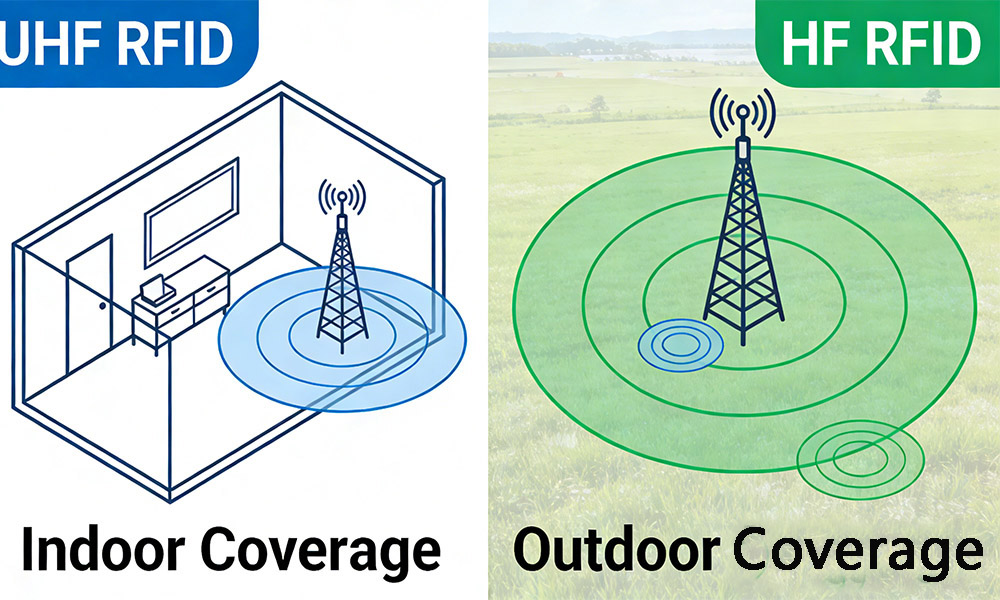
1. Identify Application Environment and Frequency
Selecting the correct frequency and environment-specific antenna is crucial:
- UHF antennas operate in 860–960 MHz and are ideal for long-range applications.
- HF/NFC antennas operate at 13.56 MHz for short-range or close-proximity applications. (Cykeo RFID Antennas)
Determine whether the deployment is indoor or outdoor, as this affects IP ratings, material selection, and durability.
2. Antenna Size, Shape, and Layout
Physical design impacts performance:
- Large, high-gain antennas → longer read distance, narrower beamwidth.
- Compact antennas → space-saving, short-range applications.
Product Recommendation:
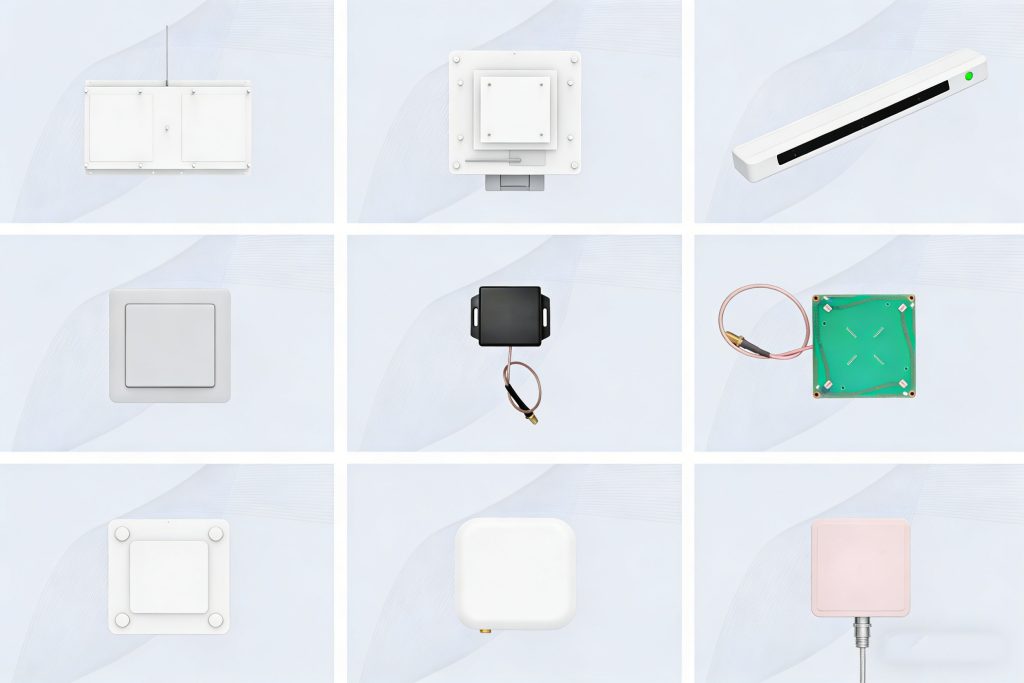
- CYKEO UHF RFID Antennas – Available in 3–12 dBi gain for flexible coverage.
3. Read Range and Antenna Type (Near-Field vs Far-Field)
Match antenna type to read distance requirements:
- Far-field antennas → long-distance reads (meters to tens of meters).
- Near-field antennas → precise short-range reads (shelf detection, access control).
4. Polarization: Linear vs Circular
Antenna polarization affects tag orientation sensitivity:
- Linear polarization → ideal for tags aligned in a fixed direction.
- Circular polarization → optimal for moving or randomly oriented tags.
Tip: In high-density setups, use RHCP/LHCP combinations to reduce interference.
5. Antenna Gain and Beamwidth
- High-gain antennas → long distance, narrow coverage.
- Low-gain antennas → shorter distance, wide coverage.
Product Recommendation:
- Use CYKEO UHF RFID antennas for customizable gain options to match your coverage needs.
6. Connector Type, Matching, and Interference
- Ensure proper connector types and impedance matching to minimize signal loss.
- Avoid excessive cable length, bending, or poor shielding.
7. Environmental Constraints and Durability
- Outdoor and industrial environments require antennas with higher IP ratings and rugged housing.
- Consider temperature, humidity, dust, and UV exposure for long-term reliability.
Conclusion
Selecting the right RFID antenna requires balancing application needs, environment, polarization, gain, and installation constraints. Using high-quality antennas such as the CYKEO UHF RFID Antennas ensures reliable reads, optimized coverage, and long-term system stability.


评论
发表评论