Handheld RFID Reader: Why Developers Keep It Around Longer Than Expected
A handheld RFID reader is one of those things people buy for a very clear reason.
Inventory.
Stock counting.
Quick audits.
And then it stays on the desk.
Much longer than planned.
Because once you actually work with one, you realize it’s not just a scanner.
It’s a flexible RFID core you can move around.
Test with.
Build on top of.
That’s why developers, integrators, and solution teams keep reaching for handheld readers—even when fixed readers already exist.
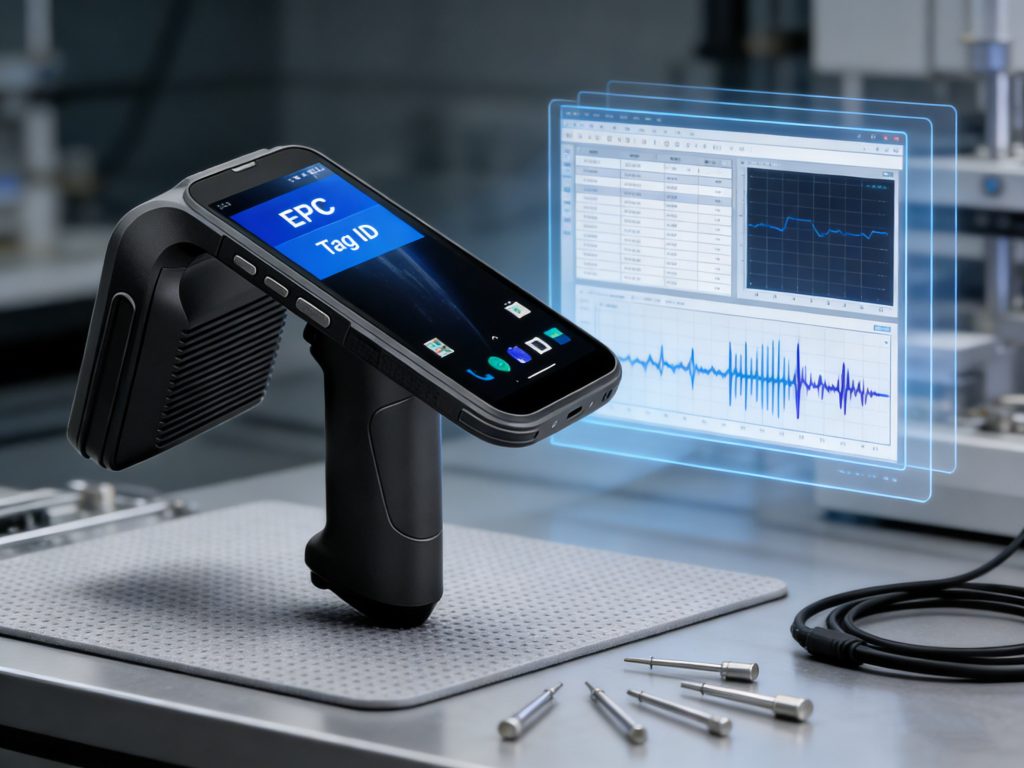
It’s Portable. But That’s Not the Point.
Yes, it’s portable.
Everyone says that.
But portability isn’t really why developers like handheld RFID readers.
The real reason?
You can bring the reader to the problem, not the other way around.
Something doesn’t scan correctly in a cabinet?
You walk over.
Scan.
See what’s happening.
Trying to validate tag behavior before installing gates or antennas everywhere?
Handheld reader.
Five minutes.
Clear answer.
That freedom changes how teams work.
This is also why handheld devices often show up early in projects, long before final hardware decisions are made.
The basics are covered well here if you want background context:Handheld RFID readers: working principle and product types
Retail Inventory Counting Is Just the Obvious Part
Retail inventory counting is the visible use case.
And yes, it works well.
Walk the aisle.
Tags respond.
No line of sight.
No rescanning.
But for many teams, inventory is just how the reader gets approved internally.
The real value shows up later.
After people start asking:
“Can we use this for something else?”
That question comes up a lot.
Where Handheld RFID Readers Quietly Become Development Tools
Here’s something you don’t see in brochures.
A lot of companies buy handheld RFID readers for internal development.
Not for daily operations.
Not for frontline staff.
For engineers.
They already have:
- Their own software stack
- Their own backend
- Sometimes their own machining or assembly capabilities
What they don’t want to do is build RF hardware from scratch.
So they buy a handheld reader.
Then they use it to:
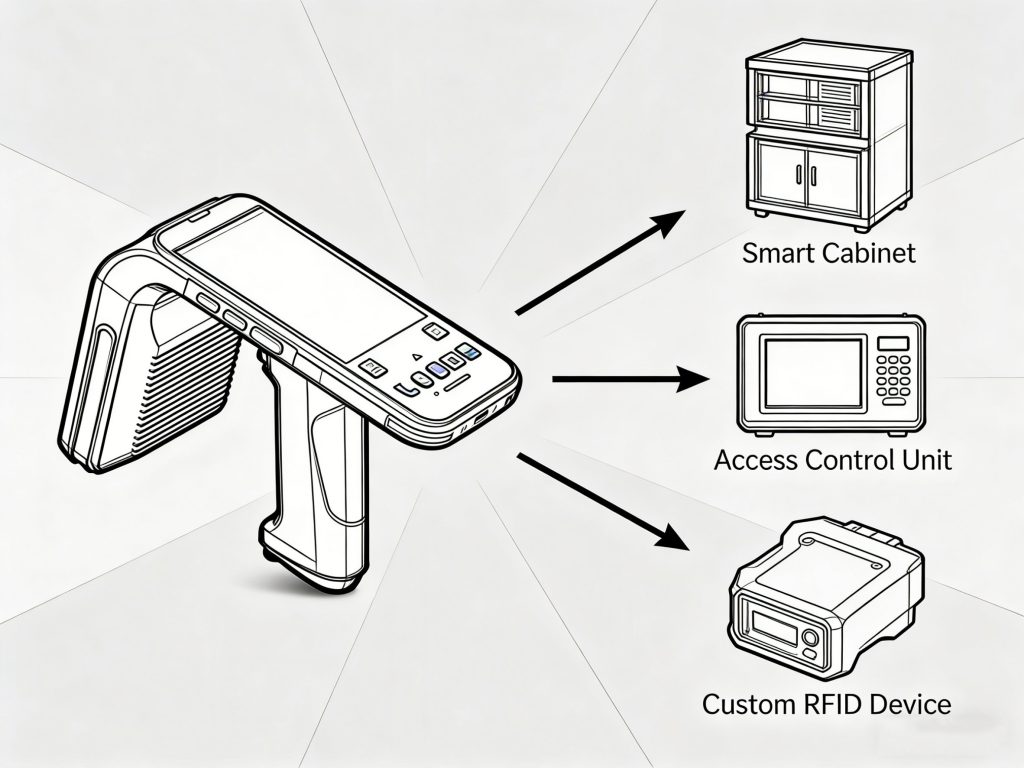
- Test RFID logic for smart cabinets
- Prototype access control behavior
- Validate tag placement
- Build demos for clients
- Try ideas without committing to fixed infrastructure
At that point, the handheld reader stops being a product.
It becomes a tool.
If you’ve seen this pattern before, this overview will feel familiar:Small business RFID readers and how teams actually use them

No One Talks About This, But Integration Is the Real Advantage
From a system integrator’s point of view, the biggest benefit isn’t speed or range.
It’s predictability.
You know how the reader behaves.
You know what data you get.
You know how it reacts to different tags.
That makes integration easier.
Especially when:
- You’re building custom cabinets
- Or access-controlled units
- Or temporary RFID-enabled devices
Some teams even use handheld readers as reference devices.
If it works here, it should work everywhere else.
That mindset shows up again and again in real projects.
Using Handheld Readers as Building Blocks
Some teams go further.
They don’t treat the handheld reader as the final device at all.
They treat it as:
RF module + antenna + stable firmware.
Everything else is custom.
Enclosure.
Workflow.
UI.
Logic.
We’ve seen handheld RFID readers used to help design:
- RFID smart lockers
- Controlled storage cabinets
- Portable access control units
- Internal tracking tools
If you’re looking at devices specifically for this kind of integration or internal development, this is usually where people start browsing:
RFID handheld readers for system integration
Not because they’re fancy.
Because they’re reliable.
And they don’t get in the way.
A Quick Note on “How to Use”
If you’re onboarding new people or non-RFID teammates, sometimes you still need a simple explanation.
This guide does that job without going too deep:How to use a handheld RFID scanner
Most experienced teams skim it once.
Then move on.
Final Thought
A handheld RFID reader rarely stays in the role it was bought for.
It starts as an inventory tool.
Then becomes a test device.
Then a development shortcut.
Sometimes even the backbone of a custom solution.
Retail inventory counting is just the entry point.
Behind the scenes, handheld readers are quietly shaping a lot of RFID systems that never get talked about.
If you’re building RFID solutions—not just deploying them—this is usually one of the first tools you reach for.


评论
发表评论