Handheld RFID Reader: Integration Benefits for Developers and System Integrators
In the expanding world of RFID technology, the handheld rfid reader has emerged as one of the most flexible and impactful tools — not just for tag scanning, but as a development component for customized solutions.
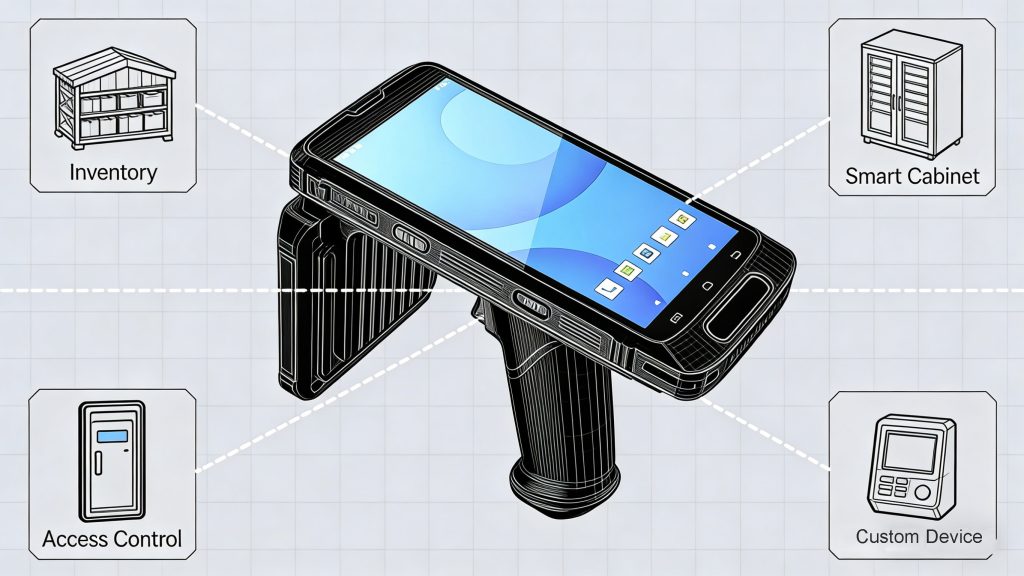
Portable RFID readers aren’t just “gadgets” for inventory counts. For RFID software developers, system integrators, and solution providers, handheld readers can be a foundation for creating tailored applications, whether it’s smart cabinets with automated tracking, custom access control modules, or specialized data collection workflows.
If you’re new to the space, this overview helps you see how handheld RFID tools work and how they are being used in practical business applications like retail inventory management and asset tracking. For a detailed beginner guide, check out: How Handheld RFID Scanners Work and How to Use Them.Handheld RFID Readers: Working Principle, Product Types, and Selection Guide
What Is a Handheld RFID Reader?
A handheld RFID reader is a portable RFID reader designed to communicate with RFID tags wirelessly. These devices typically feature:
- A built-in antenna
- An RFID reader module
- A user interface or connection to a mobile device or computer
They’re widely used where mobility and flexibility are needed — warehouse checks, retail stocktakes, field asset audits, logistics, and many other scenarios where a fixed reader (like gate or portal readers) isn’t practical.
For a broader look at how handheld readers fit into RFID environments, you can explore this overview of small-business RFID tools: Small Business RFID Readers and Their Applications.Small Business RFID Readers
How Handheld RFID Readers Work
At the heart of every handheld RFID reader is the interaction with RFID tags. When the reader’s antenna emits radio waves, nearby RFID tags are energized and respond with their unique identifier. The reader captures the data for processing or transmission.
This basic flow — power, query, tag response, data capture — is why RFID is so effective for fast scanning over a batch of tags.
For a full rundown of how handheld RFID scanners work and how beginners can use them step by step, read:How to Use a Handheld RFID Scanner: A Step-by-Step Guide for Beginners
Common Business and Development Use Cases
Retail Inventory Counting
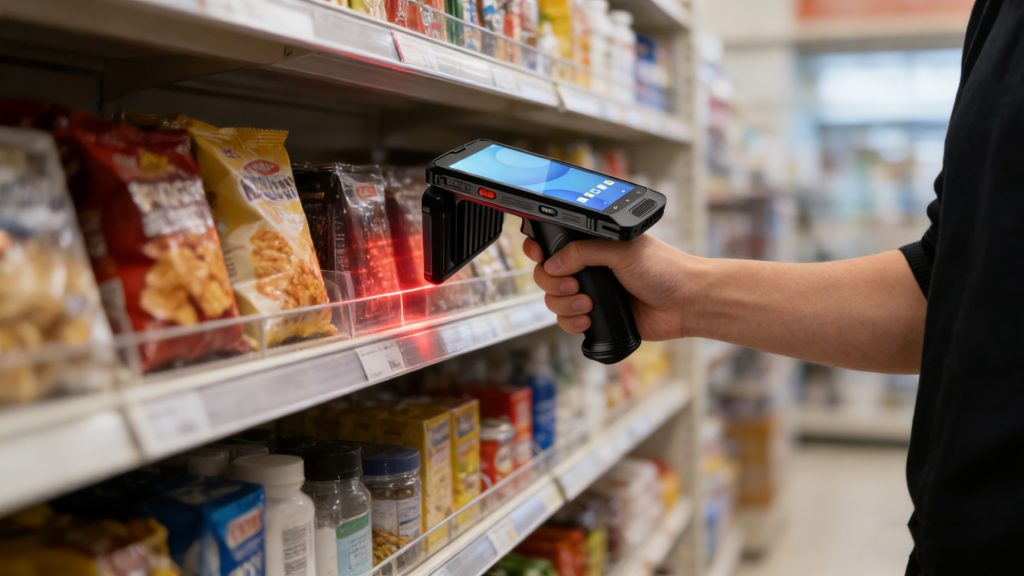
One of the most common business uses of handheld RFID readers is retail inventory counting. Unlike barcode scans that require line-of-sight, RFID tags can be read in bulk — dramatically speeding up stock audits and improving accuracy.
Handheld readers enable workers to walk through aisles and capture tag data in seconds, making RFID inventory checks far more efficient than traditional scanning.
Asset Tracking and Field Audits
For enterprises that manage large volumes of assets — tools, machinery, equipment — handheld readers offer flexible, on-site scanning. Whether in a warehouse floor or across distributed field sites, portable RFID handhelds capture data on the go.
Development of Custom Hardware
Here’s where the integration advantage really comes in:
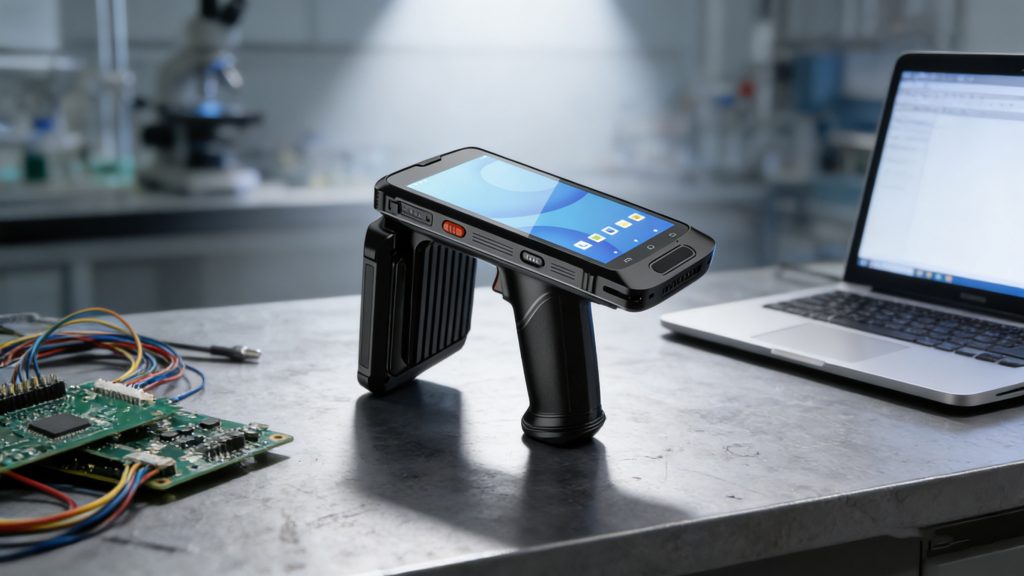
Instead of purchasing full software packages or fixed infrastructure, many RFID solution providers and system integrators buy handheld RFID readers as a development platform.
With a handheld reader, companies can:
- Leverage built-in RFID radios and antennas
- Use SDKs and APIs to capture tag data in custom software
- Integrate RFID scanning into mobile apps
- Combine handheld units with other sensors or interfaces
- Build new products like RFID smart cabinets, ruggedized check-in stations, or custom access control units
What makes handheld readers particularly attractive for developers and integrators is how they can become building blocks rather than finished black boxes.
For example, a team might procure a reliable handheld RFID reader, combine it with their in-house electronics and firmware, and assemble a custom RFID-enabled smart locker — reusing the reader’s tag processing capabilities while controlling the broader user experience on their own terms.
If you’re evaluating handheld RFID readers specifically for development and integration, take a look at this product lineup:RFID Handhelds
These devices are often chosen not just for out-of-the-box scanning, but for their ability to plug into bespoke software and systems.
Advantages for Software Developers & Integrators
From the standpoint of an RFID software developer, handheld RFID readers offer several key benefits:
Rapid Prototyping
Developers can incorporate RFID scanning into prototypes without needing to design RF hardware from scratch.
SDK and API Support
Many handheld readers provide SDKs that allow developers to integrate RFID capture into custom applications — whether for inventory apps, field service tools, or enterprise dashboards.
Flexible Deployment
Handheld readers can operate independently or be combined with fixed readers, gateways, and backend systems, giving integrators flexibility depending on the project scale.
Hybrid System Integration
Handheld units can be used as part of a hybrid system — fixed readers for portal access and handheld readers for periodic audits — all connected to central software.
Conclusion
The handheld rfid reader is far more than a scanning device — it’s a flexible integration component that enables developers, system integrators, and solution providers to build custom RFID-enabled products and workflows.
Whether you’re managing retail inventory, tracking enterprise assets, or developing specialized RFID systems, handheld readers give you a portable, programmable, and extensible platform.
If your business is developing RFID-aware applications or devices, leveraging handheld RFID readers as part of your toolkit can dramatically reduce development time and expand the types of solutions you can deliver.


评论
发表评论