CK-C1A RFID Tag Inventory System: A Practical Upgrade for Warehouse & Library Management Solutions
If you build warehouse management systems or library management platforms, you’ve probably heard this more than once:
“The system is fine. The problem is the inventory.”
Manual scans, barcode alignment, missed items, slow stocktakes — these issues show up whether it’s a warehouse aisle or a library bookshelf. The CK-C1A RFID Tag Inventory System is designed specifically to solve that layer, without forcing suppliers or developers to redesign their entire solution.
It’s not a finished “black box” product.
It’s an RFID inventory engine you can integrate, control, and extend.

Why CK-C1A Makes Sense for System Suppliers
Fast, Non-Contact Inventory (The Part End Users Actually Feel)
CK-C1A uses UHF RFID to scan tagged items in bulk, without line-of-sight.
That changes daily operations immediately:
- Warehouses can complete aisle or zone inventory in minutes
- Libraries can scan shelves without removing books
- Stock discrepancies are found early, not during audits
For suppliers, this means your system stops being “just software” and becomes a real operational upgrade.
One System, Two Very Different Environments
What’s interesting is how similar warehouses and libraries become once RFID is involved.
| Warehouse | Library |
|---|---|
| SKU-level tracking | Book-level tracking |
| Fast cycle counts | Shelf inventory checks |
| Loss & misplacement control | Missing / mis-shelved items |
| ERP/WMS integration | LMS integration |
CK-C1A handles both with the same core architecture.
Open Architecture for Developers (No Lock-In)
This is where CK-C1A really helps integrators and software teams.
API Interfaces
- RESTful API
- Native APIs
- Designed for IoT platforms and ERP integration
Whether you’re connecting to:
- WMS / ERP in warehouses
- Library management systems (LMS)
- Cloud dashboards or on-prem servers
The data flows cleanly.
Secondary Development SDK
For teams that need more than simple data calls, CK-C1A provides a complete SDK for secondary development:
- Custom firmware behavior
- Application-level logic
- Device interaction control
This is not just “API documentation.” It’s a toolkit you can actually build on.
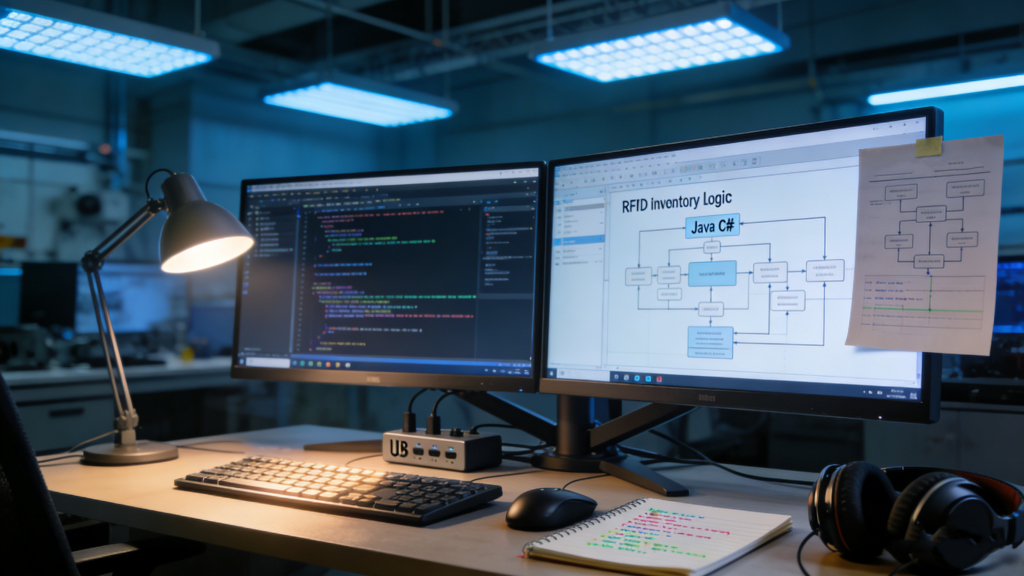
Supported Languages
- Java
- C#
Cross-platform compatibility makes it practical for:
- Windows-based systems
- Server-side services
- Hybrid cloud deployments
RFID Standards & RF Flexibility (Important in Real Projects)
CK-C1A is designed to work globally and reliably:
- Frequency Range: 840MHz – 960MHz (adjustable)
- Air Interface Protocols:
- EPC C1G2
- ISO 18000-6C
This matters when suppliers work across regions or multi-site deployments.
Hardware Freedom: Integrate, Don’t Redesign
You’re not forced into fixed hardware layouts.
System suppliers can:
- Purchase Cykeo RFID readers
- Select Cykeo RFID antennas
- Integrate them freely into:
- Warehouse tunnels
- Handheld or fixed stations
- Library shelves or inventory carts
That flexibility is what allows CK-C1A to fit both modern warehouses and traditional libraries.
Typical Use Scenarios
- Warehouse cycle counting stations
- Receiving and dispatch verification
- Library shelf inventory carts
- Book sorting and return areas
- Mixed environments (archives, storage rooms)
In most cases, CK-C1A is used behind the scenes, while your system remains front-and-center.
Why Suppliers & Integrators Choose CK-C1A
Building a reliable RFID inventory system internally often sounds easier than it is:
- RF tuning takes time
- Missed reads damage trust
- Software-hardware alignment is hard to get right
CK-C1A is already field-tested.
Suppliers focus on integration and value, not low-level RF problems.
A Practical Next Step
If you’re supplying:
- Warehouse management systems
- Library management platforms
- RFID-enabled inventory solutions
CK-C1A is worth evaluating as your RFID foundation.
Contact Cykeo to discuss hardware options, API access, or SDK integration.
Most suppliers start with a pilot — and scale from there.


评论
发表评论