RFID File Cabinet — What It Actually Changes in Real-World File Management
Honestly, if someone is still searching files by hand or flipping through old metal cabinets, they’re wasting time. Modern offices are drowning in documents, compliance rules are getting stricter, and losing a single file can turn into a serious problem. That’s exactly why the RFID file cabinet has been getting so much attention lately.
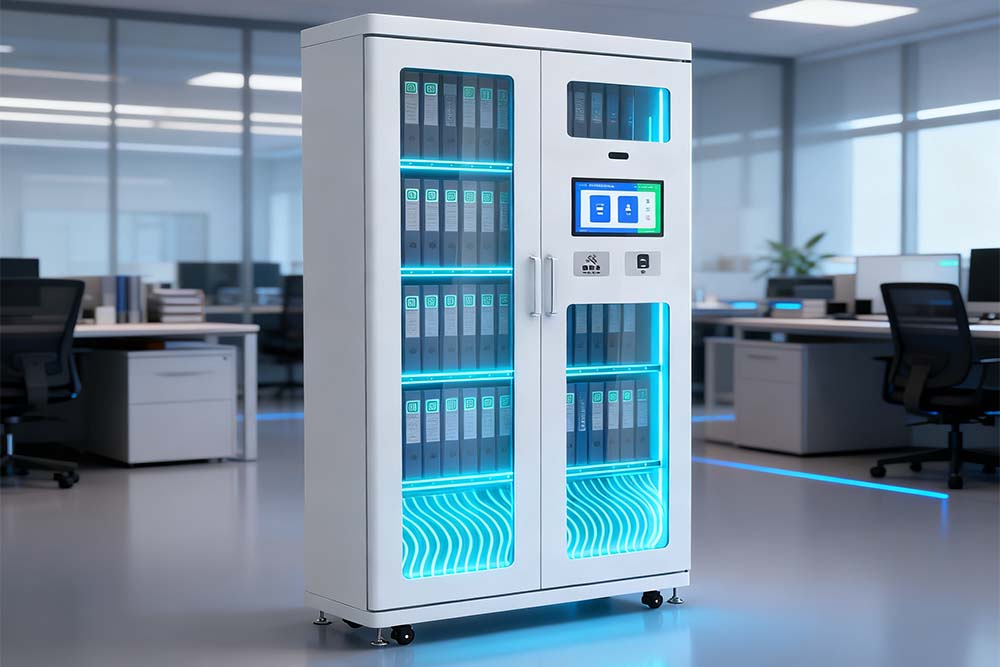
But don’t overthink it. The core idea is super simple:
Let the files “reveal themselves,” instead of humans hunting for them.
It sounds almost too easy, but once this idea gets embedded into a smart file cabinet, it completely changes how file management works.
The Real Logic Behind an RFID File Cabinet
Traditional file systems rely on manual entry, barcode scanning, and hoping nothing gets damaged or misaligned.
RFID is a whole different game.
- Every file gets an RFID tag with a unique ID
- The cabinet is packed with antennas and readers
- When something goes in, the cabinet automatically recognizes it
- When something gets removed or moved, it’s logged instantly
- The system always knows “where it is,” “who touched it,” and “whether the box is actually full or empty”
And the best part?
You don’t aim anything. You don’t scan anything. You just put the file in.
The cabinet does the rest.
Why People Are Suddenly Obsessed With RFID File Cabinets
This isn’t marketing fluff. After seeing how these systems behave in real work environments, I’d say the core advantages boil down to a few very real points.
1) Ridiculously Fast
Barcodes require alignment, scanning, waiting…
RFID?
A full shelf scan — around 10 seconds.
No angle issues. No smudged labels. No reprints.
Once you experience this speed, it feels impossible to go back.
2) Accuracy That Doesn’t Care About Conditions
Barcodes hate wrinkles, shadows, damage, reflections…
RFID doesn’t care.
It reads through folders, through dividers, even when the file is tucked between others.
In dense archives, this difference is massive.
3) Automatic audit trails — finally
More organizations need compliance logs, tracking records, and proof of access.
An RFID file cabinet records:
- When it was opened
- Who opened it
- Which file was taken
- Whether it was returned
- Full movement history
For many places, the best feature is simply:
“Now we finally know who touched the file.”
4) Security That Actually Makes Sense
A proper RFID file cabinet usually comes with:
- Electronic locking
- Access verification
- Permission control
- Backup unlocking for power failures
In short:
You can’t just open it because you want to.
5) Real reduction in lost or misplaced files
This is the biggest pain point in traditional archives.
RFID cabinets detect:
- Empty positions
- Empty folders pretending to be full
- Files that were never returned
- Wrong placements
- Activity during off-hours
It’s almost like the cabinet has its own awareness of what’s going on inside.
Where RFID File Cabinets Make the Most Impact
Pretty much any environment where files carry responsibility:
- Government records
- Legal case files
- Medical documents and reports
- Corporate archives
- Financial documents
- Research and academic records
It’s not about how many documents you have—
it’s about whether those documents must never go missing.
Is It Expensive?
Yes, the initial investment is higher than a regular cabinet.
But when you calculate what it saves:
- Hours of searching
- Lower labor load
- Fewer misplaced files
- Lower compliance risk
- Faster audits
In high-volume environments, the ROI is genuinely obvious.
One Simple Sentence to Sum It Up
An RFID file cabinet isn’t just a “smart cabinet.”
It’s an automated file management system disguised as a cabinet.
And the first time you locate a file in seconds—without opening 20 drawers—
you’ll understand exactly why so many organizations are switching.


评论
发表评论