Hospital Linen Management Finally Gets a “Stress-Free Version” — The Real-World Use of RFID
Honestly, one of the biggest headaches for hospital logistics is linen. There’s never enough. Either it’s understocked, or some department “hoards” it; either the laundry is slow, or the inventory tracking can’t keep up. On top of that, with strict infection control standards, any unclear records can easily get flagged during quality inspections.
In the past, everything was counted manually. Nurses hated it, cleaning staff couldn’t monitor it, and logistics teams were always chasing down linen. But more and more top-tier hospitals are changing their approach: instead of “people watching linen,” they let systems watch linen.
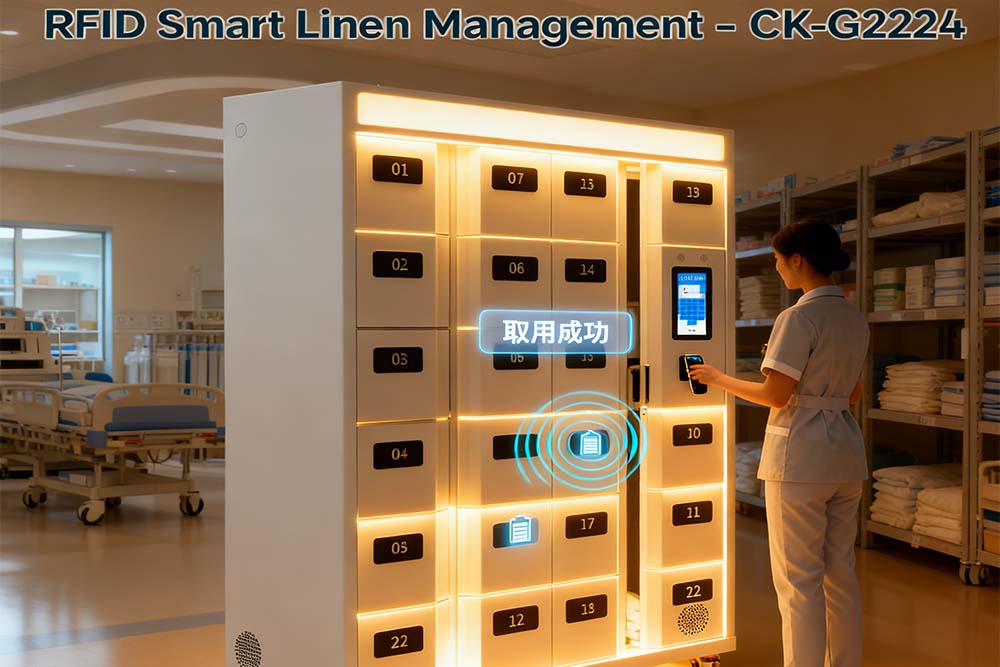
A mature solution is to place an RFID Linen Management Cabinet in each department, making distribution, return, and tracking fully automated.
Today, we’re talking about the Cykeo CK-G2224 RFID Linen Management Cabinet — designed specifically for hospitals with high-frequency, multi-point, multi-user scenarios.
Why Hospitals Need an RFID Linen Cabinet
Talk to hospital logistics staff, and you’ll quickly hear three major pain points:
- Where did the linen go? Nobody knows.
Nurses are busy saving lives and writing records; nobody has time to count linen every day. So, how many pieces were issued, used, washed, or lost? Everyone relies on “memory.” RFID solves this: every piece of linen has a “name,” and records are crystal clear. - Departments claim they don’t have enough, while the warehouse says it was fully supplied.
Typical blame game. An RFID cabinet shows exactly: who took what, when, remaining stock, whether any department overused, or if something wasn’t returned. All records are automatic — no chasing around. - Manual inventory is slow and error-prone.
A big bag of mixed linens can be overwhelming. An RFID cabinet? Just place the items inside, and the system automatically identifies and counts them in seconds.
How CK-G2224 Works in a Hospital
In short, it’s a cabinet that “records every single piece of linen,” but hospitals have various use cases. Let’s break it down:
1. Self-Service Linen Pickup
Nurses swipe a card or scan a code → take the linen → close the door.
The cabinet senses what was taken and updates stock immediately.
Benefits: no more nurse manager logging, prevents overuse, night shift self-service works smoothly, and logistics can monitor consumption in real-time.
2. Automated Linen Return
Used linen is placed into an intelligent return bin. RFID automatically logs the return and the system tracks: used items, items waiting for laundry, and items not returned for a long time.
Infection control becomes systematic, not reliant on memory.
3. Full Laundry and Sterilization Tracking
The system tracks each item’s lifecycle: number of washes, duration, damage, and retirement needs.
For hospitals with high hygiene standards, traceability is mandatory.
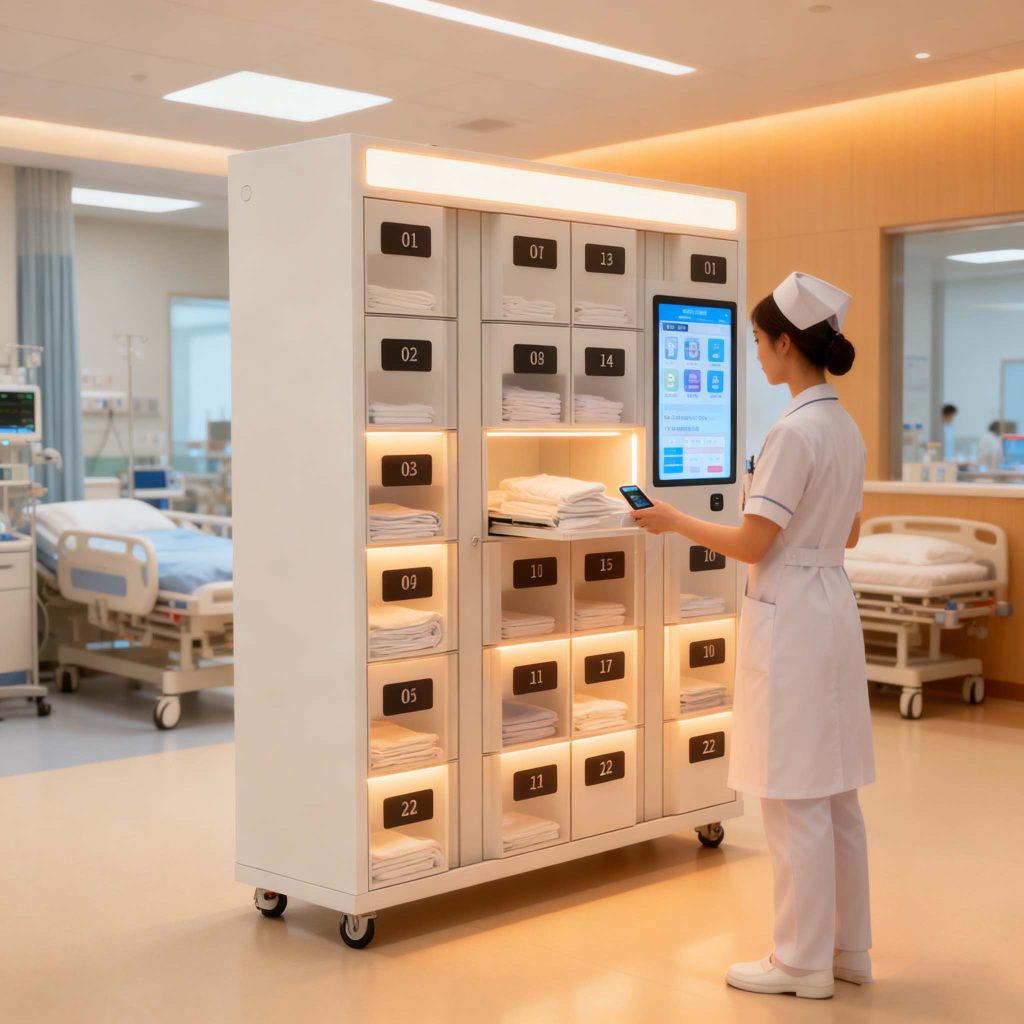
Hospital-Friendly Features of CK-G2224
- High Capacity + Reliable RFID Recognition
Even a fully stocked cabinet is accurately tracked — crucial for operating rooms and wards. - Real-Time Inventory Sync
Any item taken or returned updates the system immediately. Logistics no longer need to count manually. - Flexible Login Options
Supports hospital ID, RFID card, QR code, and access card. No issues during shift changes. - Customizable Access Permissions
ICU: limited to 2 sets per pick. OR: can take more. Cleaning staff: only returns. Permissions can be department- and role-based. - Detailed Data Reporting
Logs usage, returns, loss statistics, department consumption trends, laundry turnaround — essential for budgeting, planning, and infection control.
Real Feedback After Deployment
- Faster Linen Turnover
Previously hoarded linen is now transparent — nothing “disappears.” - Nurses Save Time
No queues, no warehouse runs, no manual logging — especially noticeable during night shifts. - Better Cost Control
Waste drops significantly; some hospitals reduced lost linen from over 10% to under 2%. - Standardized Infection Control
Every piece has a record — no more “used but unlogged” situations.
Bottom Line
RFID Linen Cabinets aren’t just “cool tech.” They are practical tools for reducing hospital logistics burden, improving infection control, and cutting costs.
The Cykeo CK-G2224 automates inventory, recording, tracking, and lifecycle management, turning linen management from “memory-based” to “system-driven.”
For hospitals building smart logistics, warehouse management, or traceable infection control, starting with department-level RFID cabinets is highly recommended.


评论
发表评论