What is UHF RFID Reader?
Ever wonder how warehouses can keep track of hundreds of items in seconds, or how parking lots can automatically recognize cars as they drive in? Most of the time, the magic behind this is UHF RFID. Let’s break it down in plain terms.
UHF RFID in a Nutshell
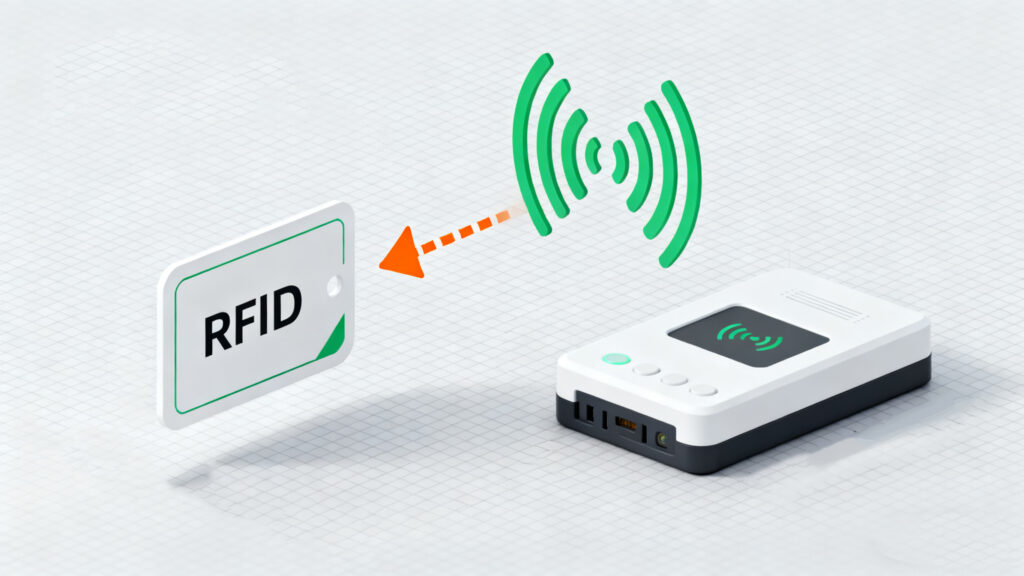
RFID stands for Radio-Frequency Identification. Think of it like a high-tech name tag that talks to a reader. A basic system has three parts:
Tag – the little label or card attached to whatever you want to track
Antenna – sends and receives signals to and from the tag
Reader – the device that actually talks to the tag
UHF stands for Ultra-High Frequency, usually in the 860–960 MHz range (depends on your country). UHF tags, especially passive ones, don’t have batteries. They “wake up” when they enter the reader’s signal. Compared to low-frequency (LF) or high-frequency (HF) tags, UHF tags can be read from further away and much faster. That’s why warehouses and logistics love them.
What Exactly Does a UHF RFID Reader Do?
A UHF reader is basically the “ear” of the system. Here’s what it does:
Sends out a signal to power up passive tags
Receives the signal tags send back with their info
Sometimes writes data to writable tags
Connects to your software so you can track, count, or manage items
You’ll see them in two main forms: fixed readers, like at a warehouse gate or parking entrance, and handheld readers, which people use to scan items or do inventory checks.
How It Works (Simple Version)
Here’s a real-world way to think about it:
The reader sends out a radio signal. This creates an invisible “field” in the area.
When a passive tag enters that field, it grabs energy from the signal and powers up.
The tag “talks back” by reflecting a signal to the reader. This signal carries the tag’s info, like a unique ID.
The reader decodes it and sends it to your system, which logs it or triggers an action.
This back-and-forth is called backscatter communication. It’s clever because tags don’t need a battery—they can just piggyback off the reader’s signal.
Why UHF Readers Are Useful
Read from a distance – you don’t need to touch the item
Read multiple tags at once – perfect for large inventories
Flexible tag designs – labels, cards, hard tags, whatever fits your items
Integrates with software – works with inventory apps, access control, or tracking systems
Things to Watch Out For
UHF isn’t perfect:
Metal and water can mess with signals – careful tag placement helps
Different countries have different rules – make sure your reader follows local regulations
Planning matters – antenna placement, power settings, and environment all affect performance
Where You’ll See UHF Readers
Warehouses & logistics – keeping track of pallets and shipments
Asset management – monitoring expensive equipment or tools
Parking & access control – recognizing cars or staff automatically
Retail – inventory tracking and faster checkout
Healthcare – tracking medical supplies or devices
Factories – monitoring production lines or parts
Bottom Line
A UHF RFID reader is a smart tool that makes tracking things fast and easy. It can read items from a distance, handle many at once, and plug into software for smooth operations. With the right setup, it saves time, cuts errors, and keeps everything running efficiently.


评论
发表评论