RFID Passive and Active Tags: What You Need to Know
Introduction
When people talk about RFID passive and active tags, they are usually trying to figure out which technology fits their project best. RFID has been around for decades, but only in the last few years has it moved from niche logistics systems into everyday applications—think retail security, asset tracking, or even smart parking systems. To understand the difference between passive and active tags, it helps to break things down into how they work, what they cost, and where they are commonly used.
What Are Passive RFID Tags?
A passive RFID tag has no battery inside. It’s like a mirror that wakes up only when light hits it. Instead of light, it uses energy from the RFID reader’s radio waves. Once the tag receives that energy, it reflects back a signal with its unique ID or stored data.
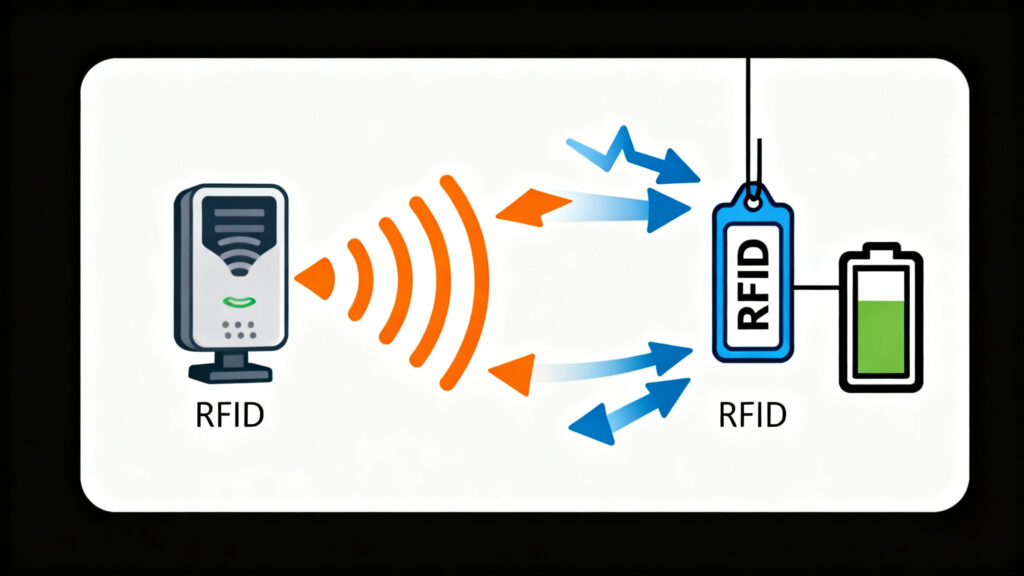
Because of this design:
Read Range: Limited, usually a few centimeters up to 10 meters depending on frequency.
Size: Very small, even thin enough to embed into product labels.
Cost: Extremely low, which is why they are popular in large-volume applications like inventory tracking or retail anti-theft systems.
Maintenance: Zero battery, so they can last practically forever if the material doesn’t wear out.
Think of passive tags as stickers or labels that quietly sit there until someone scans them.
What Are Active RFID Tags?
In contrast, an active RFID tag has its own battery and sometimes even sensors built inside. Instead of waiting for the reader’s energy, it actively sends signals. This is more like a small walkie-talkie that constantly shouts its ID to anyone listening.
Key characteristics:
Read Range: Much longer—up to 100 meters or more.
Functionality: Can include temperature, motion, or GPS sensors.
Cost: Higher, often several dollars to tens of dollars per tag.
Maintenance: The battery eventually dies, which means replacement or recharge is required.
Active tags are often used in high-value tracking scenarios: tracking medical equipment in hospitals, containers in shipping yards, or even employees inside secure facilities.
Passive vs Active: A Side-by-Side Comparison
| Feature | Passive RFID Tags | Active RFID Tags |
| Power Source | No battery (powered by reader) | Built-in battery |
| Read Range | Short to medium (cm to ~10 m) | Long (10 m to 100+ m) |
| Size | Small, lightweight | Larger, bulkier |
| Cost per Tag | Very low (cents) | High (dollars+) |
| Lifespan | Practically unlimited | Limited by battery life |
| Applications | Retail, libraries, access control | Asset tracking, logistics, real-time monitoring |
This table gives the quick snapshot, but the decision usually comes down to balancing cost vs. performance.

Where Do Passive and Active RFID Tags Make Sense?
Passive Tags in Everyday Life
Retail stores: anti-theft labels on clothes or electronics.
Libraries: checking books in and out.
Smart cards or access badges.
Active Tags in High-Value Applications
Hospitals: keeping track of surgical instruments or beds.
Warehousing: tracking forklifts, pallets, or containers.
Oil & gas industry: monitoring equipment in harsh environments.
The key point: if you just need to identify lots of items cheaply, passive tags are the answer. If you need real-time location data across a wide area, active tags are worth the investment.
Common Misunderstandings
A lot of people assume that passive RFID is “worse” than active RFID because the range is shorter. That’s not true—it just solves a different problem. In fact, many retailers wouldn’t even consider active RFID because the cost would be too high. On the flip side, using passive tags in a massive shipping yard would be frustrating because readers can’t pick up signals from hundreds of meters away.
Conclusion
Understanding rfid passive and active tags is really about knowing what you need from your RFID system. Passive tags are cheap, durable, and perfect for high-volume, low-cost tracking. Active tags, though more expensive, open the door to long-range, real-time monitoring that passive tags simply can’t provide.
Before making a choice, always match the tag type with the application. It’s like choosing between a bicycle and a car—both get you from A to B, but the context matters.
FAQ
Q: Can passive and active RFID tags work together?
Yes. Some systems combine both, using passive tags for item-level tracking and active tags for high-value assets.
Q: Do active RFID tags always need replacement?
Eventually yes, because the battery runs out. Lifespan varies from 3 to 10 years depending on usage.
Q: Which is more secure, passive or active?
Security depends more on the system design and encryption, not the tag type. Both can be secured if the right protocols are used.


评论
发表评论