Deep Dive into leitor rfid uhf,Principles · Applications · Hands-on Insights
What is leitor rfid uhf
The term leitor rfid uhf simply refers to an RFID reader that works in the UHF (ultra-high frequency) band. In short, these devices use radio waves to activate and read tags (etiquetas). Compared to LF or HF readers, UHF usually covers much longer ranges.
Frequencies vary by region: in the US it’s usually 902–928 MHz, in Europe 865–868 MHz, and elsewhere it depends on local regulations.
Most everyday deployments use passive UHF tags — meaning no battery inside, they wake up when hit by the reader’s RF field and send their data back. Active and semi-active tags exist too, but they’re less common in retail or logistics.
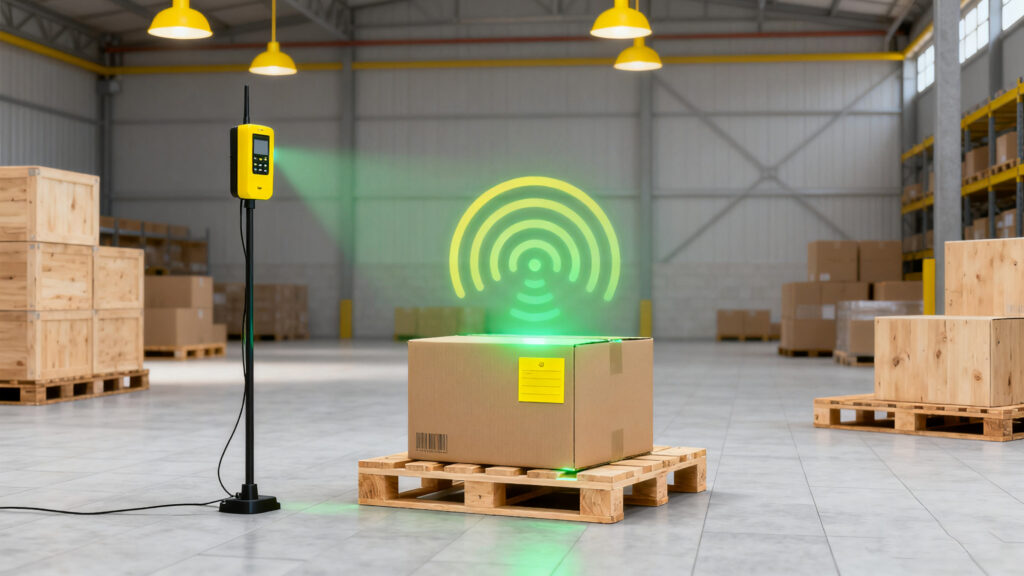
How it Works (in practice)
From my own deployments, a leitor rfid uhf basically follows this flow:
- Signal emission – The reader’s antenna blasts out RF waves. Power and frequency matter here, and you have to stay legal in your country. If the power is too low, tags won’t wake up; too high and you risk interference (or fines).
- Tag response – Passive tags in the field get energized, then bounce back their ID and data.
- Signal capture – The reader picks up this return signal, demodulates and checks for errors.
- Data handling – Finally, the info is sent to some backend system — inventory software, access control, asset management, whatever the job is.
Some practical notes I’ve learned the hard way:
- RF environment is king: metal and liquid mess with signals a lot. Always field-test before final installation.
- Antenna direction matters: wrong angle = no read, even with strong power. With handheld readers, how you hold it really affects results.
- Tag choice counts: not all UHF tags are equal. Chip type, size, and packaging impact read range and reliability more than you’d think.
Key Specs to Watch When Choosing
Here’s a mix of what articles say + my own notes:
| Spec | Why it matters | Practical advice |
|---|---|---|
| Frequency range | Each country enforces its own UHF band. Wrong band = illegal or won’t work. | Double-check local rules first. Choose a reader that supports that band or is adjustable. |
| RF output power | More watts = longer range, but also more interference risk. | Start low, increase gradually. Watch for false reads. |
| Interface / comms | Options like USB, Ethernet, Bluetooth, WiFi. Different setups need different links. | Fixed installs → Ethernet; mobile/handheld → wireless. |
| Antenna type & gain | Antennas define coverage shape. High-gain gives more distance but narrower angle. | In cluttered spaces, use adjustable or multiple antennas. |
| Speed / tag concurrency | Warehouses = tons of tags at once. Weak readers choke. | Stress test with a pile of tags before rollout. |
| Durability / IP rating | Heat, dust, moisture… readers don’t live in labs forever. | Check IP rating, shock resistance if it’s an industrial site. |
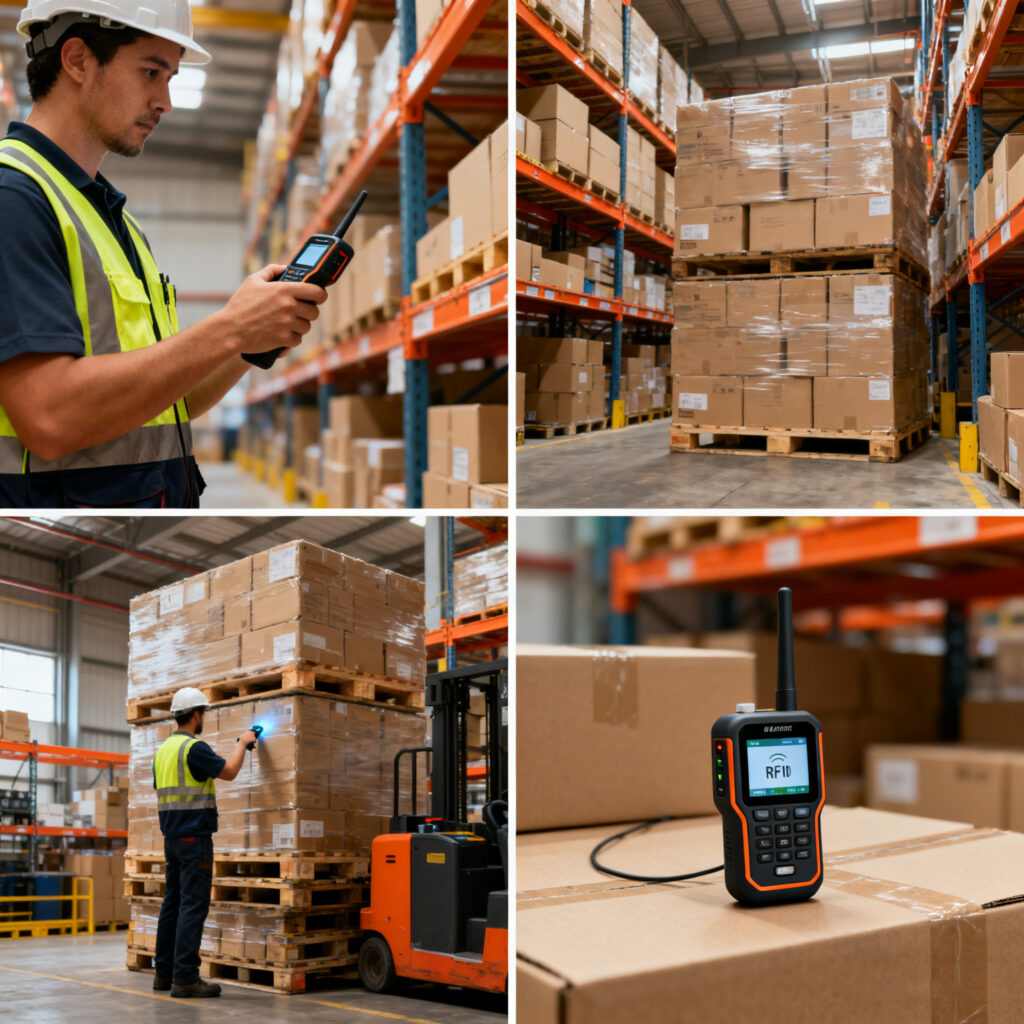
Where leitor rfid uhf Shines
- Logistics & Warehousing: For inbound/outbound scanning, way faster than barcodes. I once set up a system in a warehouse, and when boxes were stacked tight, tags behind others got missed until we adjusted tag placement.
- Access Control / Parking: Mount at gates to read vehicle/person tags. Had one project where reflections from glass and metal rails ruined accuracy — solved with shielding.
- Asset Tracking: Hospitals, tool rooms, etc. Passive tags are fine but don’t stick them on bare metal unless you like headaches. Active tags are better but more expensive.
- Retail / Store Inventory: You can walk a shelf and capture hundreds of items in minutes. But if shelves are dense or packaging blocks signals, you’ll get spotty results.
Common Problems (and Fixes)
| Problem | Why it happens | Quick Fix |
|---|---|---|
| Tags not reading | Weak signal, wrong orientation, metal interference | Raise power, re-angle antennas, use better tags |
| Multiple wrong reads | Too many tags, reflections, protocol mismatch | Tune reader settings (Gen-2 etc.), reduce tag density, filter in software |
| Performance unstable | Changing environment, RF interference, old tags | Re-test regularly, calibrate, maybe upgrade hardware |
| Legal headaches | Wrong frequency band for your country | Buy region-compliant gear or adjustable readers |
A Real-world Deployment Flow
Here’s roughly how I rolled one out in a warehouse (with some trial and error along the way):
- Gather needs – define distance, number of tags, metal/liquid in the environment, fixed vs mobile use.
- Test before buy – get sample readers that support your frequency band. Try them with your real tags.
- Install hardware – place antennas where they won’t be blocked. Plan cables, dust/water protection, and network access.
- Integrate software – link the reader’s output to your WMS/ERP or asset system. Add user permissions and error handling.
- Fine-tune – experiment with power levels, antenna angles, and tag designs until read rate is steady.
- Monitor & maintain – track read failures over time. If one spot suddenly drops, maybe an antenna shifted or something’s blocking it.
Final Thoughts
A leitor rfid uhf is powerful tech for long-range and bulk tag reading. But it’s not plug-and-play magic. The success depends on details: frequency, power, antenna setup, tag quality, and the environment.
If you’re setting up a system, do small-scale testing first, log the real data (distance, read rates, errors), and only then scale up. It saves a lot of frustration


评论
发表评论